
World Premiere: Japan Tests Deep-Sea Rare Earth Elements Mining

Japan has launched testing for the extraction of rare earths from the sea at a depth of over 6,000 meters. These are rare minerals that are particularly valuable for battery manufacturing. Drilling at such depths—exceeding the height of Mount Fuji—is a world first. The Land of the Rising Sun is eager to reduce its dependence on China for supplies of critical materials, but mining is harmful to local ecosystems, environmentalists say.
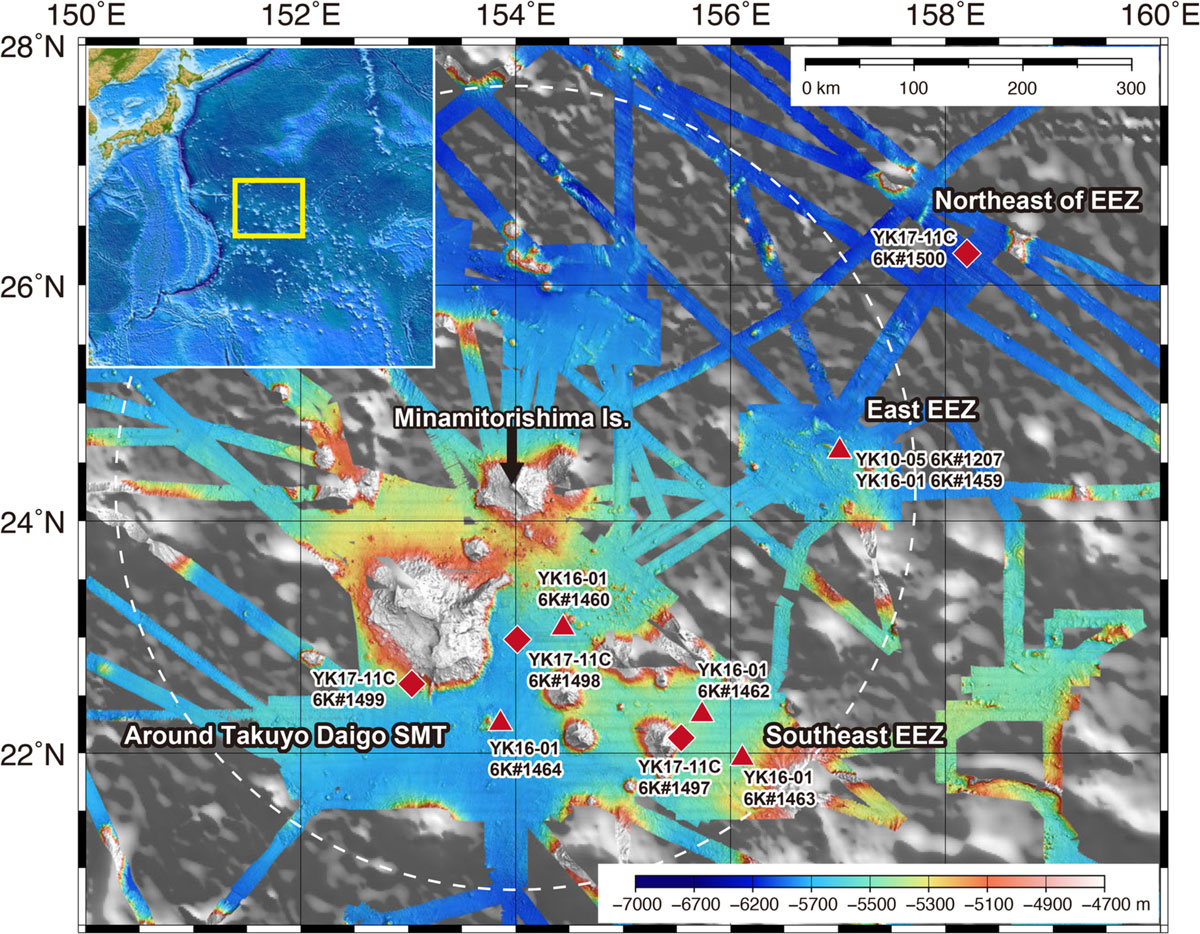
The first testing expedition for extracting rare earth elements from the sea took place off the coast of Minamitorishima Island, in the southeast of the Japanese archipelago, on January 12. The rare earth elements will be extracted from a depth of over 6,000 meters, setting a new world record. It is estimated that there are over 16 million rare earth elements in this area, making it the third largest deposit in the world. The extracted amount would be equivalent to the current consumption of dysprosium over a period of 730 years.
Rare earth elements are essential materials for many industries: digital technology, automotive, energy and even defence.
The search for “ocean gold” officially launched
Chikyu, a deep-sea scientific drilling vessel, set sail for the remote island of Minamitorishima in the Pacific Ocean, southeast of the archipelago, whose surrounding waters are believed to be rich in precious and essential minerals. Disprosium, neodymium, samarium… these rare earth elements, which are particularly difficult to access and costly to extract, are essential for the proper functioning of entire segments of multiple economic sectors (automotive, renewable energy, digital technology, defence, nuclear energy, etc.). They are also used to make powerful magnets, catalysts and electronic components.
During its mission, which will last until February 14, 2026, Chikyu will sink a pipe that will allow an “extraction machine” attached to its end to reach the seabed and recover rare-earth-rich mud, the Japan Agency for Marine-Earth Science and Technology explained. Through this operation, presented as the world’s first attempt to drill the seabed at such depths—6,000 meters below the surface, equivalent to almost twice the height of Mount Fuji—Japan hopes to reduce its dependence on China for critical materials.
“If Japan could successfully extract rare earths around Minamitorishima constantly, it will secure domestic supply chain for key industries. Likewise, it will be a key strategic asset for Takaichi’s government to significantly reduce the supply chain dependence on China,” Takahiro Kamisuna, research associate at The International Institute for Strategic Studies, said.
However, according to the Nikkey business daily, the government has not yet revealed any plans for commercial mining. The potential start of such operations “will likely be around 2030, after the development of processing technologies and assessment of environmental impact,” noted Yoshikiyo Shimamine, a researcher at the Dai-ichi Life Research Institute.
Meanwhile, China has stepped up pressure on Japan following Prime Minister Sanae Takaichi’s comments in November 2025. The extremely conservative head of government had suggested that Tokyo could respond militarily to an attack on Taiwan, a democratic island whose sovereignty is claimed by Beijing.
Bilateral tensions between Japan and China: Beijing punishes Tokyo for using essential minerals as an economic weapon
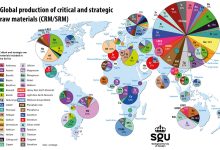
Beijing has long used its dominance over critical metals as geopolitical leverage, including in the trade war with US President Donald Trump’s administration. China accounts for nearly two-thirds of global rare earth mining production and 92% of refined production, according to the International Energy Agency.
Thus, on January 6, the Chinese administration announced that it would tighten controls on exports to Japan of Chinese goods with dual civilian and military use. According to the Wall Street Journal, these restrictions also apply to the transportation of rare earth elements.
Japan, in turn, depends on China for 70% of its critical mineral imports. However, the country has been striving to diversify its supply sources since a previous dispute in 2010, when Beijing suspended exports for several months.
Deep-sea mining has become a point of geopolitical tension, with growing concern over Donald Trump’s desire to accelerate drilling in international waters.
Deep-sea mining, a threat to marine species
Environmentalists, in turn, are sounding the alarm about the threats this practice poses to marine ecosystems and the disruption it causes to the ocean floor. The International Seabed Authority (ISA), which has jurisdiction over the seabed outside national waters, is pushing for the adoption of a global code to regulate deep-sea mining.
Japan and rare metals: A brief history
Fifteen years ago, at a depth of over 3,000 meters in the Pacific Ocean, Japanese scientists confirmed for the first time, in a study published in the journal Nature Geoscience, that they had identified enormous quantities of gadolinium, lutetium, terbium, and dysprosium in mud samples taken from the bottom of the Pacific Ocean.
After conducting numerous analyses at 78 sites located at depths of between 3,000 and 6,000 meters in international waters around the island of Hawaii and east of Tahiti, Japanese researchers estimated that the Pacific seabed has a potential reserve of rare earth elements 1,000 times greater than that identified worldwide.
According to an American study from that period, the Earth had only 110 million tons of these rare metals on its surface. One of the Japanese scientists, Yasuhiro Kato, suggested that there could be an underwater volume of 100 billion tons. In the richest areas, he says, extracting sediments from an area of 5 square kilometres would be enough to meet global demand for a year.
An article published in Scientific Reports magazine on April 10, 2018, gave the Japanese hope for possible independence from Chinese suppliers of strategic metals. The article quotes an excerpt from the South China Morning Post. “Researchers have identified a 400 km² area of seabed estimated to contain 16 million tons of rare earth oxides, including enough yttrium to meet 780 years of domestic demand, 620 years of europium, 420 years of terbium, and 730 years of dysprosium.”
We recall that global demand for strategic materials was approximately 160,000 tons for 2016.
In 2023, Japan discovered a deposit of rare metals on the floor of the Pacific Ocean, around Minamitorishima Island, the easternmost island of the Japanese Archipelago.
On June 21, the Nippon Foundation and the University of Tokyo announced in a joint statement the discovery of a deposit covering a vast area of 10,000 km² in Japan’s exclusive economic zone (EEZ). Of the estimated 230 million tons, the deposit is said to contain approximately 610,000 tons of cobalt—equivalent to 75 years of Japanese consumption—and 740,000 tons of nickel—equivalent to 11 years of Japanese consumption.
Geological survey of the EEZ around Minamitorishima Island
Researchers have identified several polymetallic nodules (also called manganese nodules), ranging in size from a few centimetres to several tens of centimetres. A nodule forms when iron or manganese hydroxides adhere to rocks, and their accumulation creates a compact mass over time.
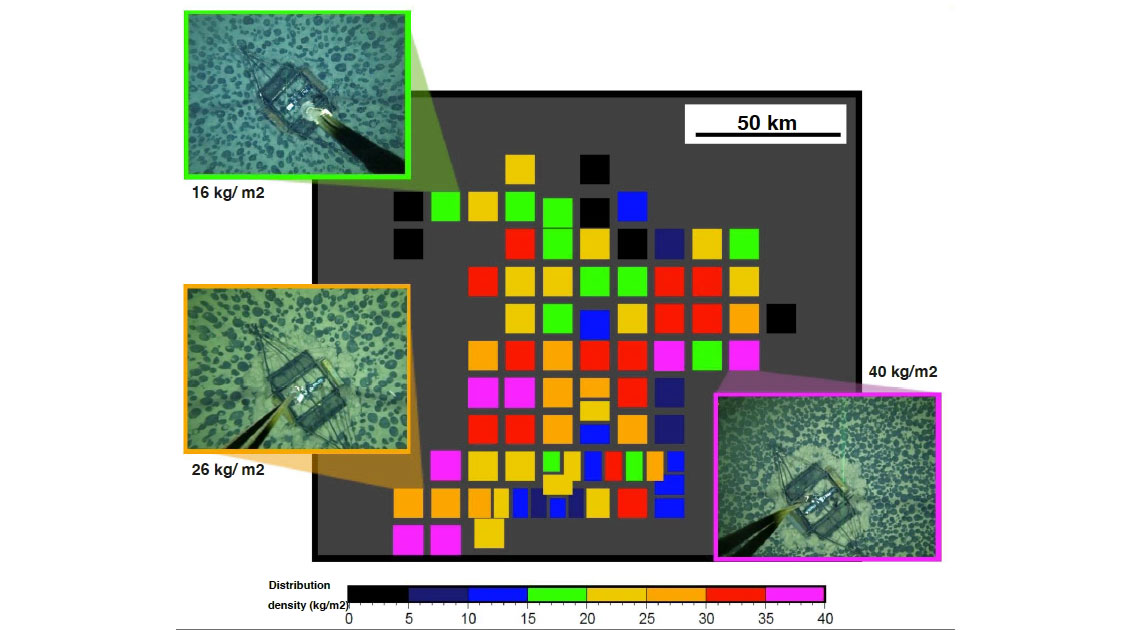
Between April 24 and June 9, 2024, the research group led by Professor Katô Yasuhiro of the University of Tokyo analysed the seabed in the EEZ around Minamitorishima Island at depths ranging from 5,200 to 5,700 m. They confirmed the existence of a manganese nodule deposit covering almost 10,000 km, with estimates indicating 23 kg of manganese nodules per square meter, and in 30% of the area studied, the quantity can reach 30 kg/m². Researchers also assessed the potential environmental impact of manganese mining.
The Japanese perspective is also presented from the perspective of a supply disruption: “The world relies heavily on China for rare earths, as it produces most of these elements on the market. But Beijing has severely restricted its exports during periods of diplomatic tension. In 2010, for example, Japanese producers faced severe shortages as a result of limited Chinese exports.”
Rare earths, a misleading term
Rare-earth elements are a group of 17 chemical elements in the periodic table, notably fifteen lanthanides, scandium and yttrium. Scandium and yttrium are considered rare earth elements because they tend to be found in the same minerals as lanthanides and have similar chemical properties. The rare earth elements are cerium (Ce), dysprosium (Dy), erbium (Er), europium (Eu), gadolinium (Gd), holmium (Ho), lanthanum (La), lutetium (Lu), neodymium (Nd), praseodymium (Pr), promethium (Pm), samarium (Sm), scandium (Sc), terbium (Tb), thulium (Tm), ytterbium (Yb), and yttrium (Y).
But the term “rare earths” is misleading. In fact, except for promethium, which is radioactive, these elements are actually abundant in the Earth’s crust.
Cerium, for example, is the 25th most abundant element, on a par with copper. The ‘rare’ designation is justified by the fact that, due to their geochemical properties, they are highly dispersed and found only in low concentrations in exploitable ores.
Rare earths are divided into two groups: light rare earths (Sc, La, Ce, Pr, Nd, Pm, Sm, Eu, and Gd, also known as the cerium group) and heavy rare earths (Y, Tb, Dy, Ho, Er, Tm, Yb, and Lu, also known as the yttrium group).
The distinction is mainly based on the electronic configuration of each element. However, it should be noted that heavy rare earth elements are significantly rarer than light rare earth elements: on the one hand, deposits of light rare earth elements are more common, and on the other hand, deposits of heavy rare earth elements are more valuable because they often also contain a significant amount of light rare earth elements.
Rare earth elements have sparked interest for numerous high-tech applications. Their electromagnetic properties can, in small quantities, improve the properties of materials. They have therefore become indispensable in technological fields.
Rare earths and strategic metals, at the heart of geopolitical tensions
Essential for modern technologies (digital, green energy, defence), strategic metals are increasingly the bone of contention between the world’s countries.
The most recognized global problem in strategic metals is the Chinese monopoly: China controls almost 90% of the refining and processing market, giving it a strategic advantage.
Another problem is that Western countries (the United States, the EU) have lost their sovereignty in this area and are trying to regain it.
These metals are also crucial for wind turbines, electric vehicles etc., making their supply essential for the green transition. The defence sector is highly relevant, as some rare metals are vital for military systems (lasers, radars), raising concerns about national security.
Rare earth adventure, beginnings
The adventure of rare earths began in 1787, when a Swedish amateur mineralogist, artillery lieutenant Carl Axel Arrhenius, visited the feldspar quarries at Ytterby and discovered a black mineral that he named ‘ytterbit.’ This led to the discovery of a new oxide, which would later be named yttrium for the corresponding element.
In 1803, cerium was independently identified in Germany by Martin Heinrich Klaproth and in Sweden by Jöns Jacob Berzelius and Wilhelm Hisinger.
Société des Produits Chimiques des Terres Rares (Rare Earth Chemicals Company) was founded in 1919 by Georges Urbain with financial support from the Worms group. It set up a monazite processing plant in Serquigny (France). This factory was destroyed by bombing during the Second World War.
In terms of research, a rare earth laboratory was founded by Urbain in the 1930s at the École Nationale Supérieure de Chimie de Paris (National Higher School of Chemistry in Paris).
In the 1940s, rare earth elements were purified on an industrial scale.
In 1948, the Rare Earths Company set up a unit in La Rochelle, which later became the Rhodia-Rare Earths plant that produced thorium nitrate until the 1950s.
As part of Operation Alsos, Samuel Goudsmit’s team searched the headquarters of the Rare Earths Company in Paris, where they found documents proving the transfer of thorium to Germany.
Rare earths have been commonly used in industry since the 1970s.
So, in the 1940s, rare earth elements were purified on an industrial scale, and in the 1970s, one of them, yttrium, found widespread application in the manufacture of phosphors for cathode ray tubes used in colour television.
Strategies for access to rare metals
From diversifying sources to reducing dependence on other countries to recycling, but also as a bargaining chip in the trade war, today, solutions are being sought to achieve independence from the major holders of these precious metals.
- Diversification of sources: massive investments in Australia (second largest producer), projects in the United States (MP Materials), Europe (Sweden), and Africa.
- Reducing dependence: The EU aims to extract and process 10% of its needs by 2030.
- Recycling: developing “urban mining” (electronic waste) to create more sustainable and less costly recycling streams.
- Trade and diplomatic war: potential use of rare earths as diplomatic leverage (e.g., Chinese export restrictions).
Rare earths present in all major mining regions
Rare earth elements are present in all major mining regions (South Africa, Australia, the Canadian Shield, the American West, etc.), but 98% of the European Union’s consumption is imported from China (in 2021). Although mining has existed elsewhere, particularly in North America, it has been abandoned due to insufficient profitability. The concentration of production in China (70% of global extraction in 2023) is worrying other major powers, which are seeking to diversify their supply. This explains the proliferation of extraction projects (in Canada, Greenland, Finland, etc.) on the one hand, and recycling and reprocessing projects on the other.
There are several research projects, for example, for the recovery of rare metals contained in batteries, magnets, capacitors, screens etc. Currently, this is far from true: globally, the recycling rate for at least half of these metals is less than 1%.