
Romania Eficienta 2025 Forum: Transforming the Buildings Sector through Energy Renovation and Decarbonization

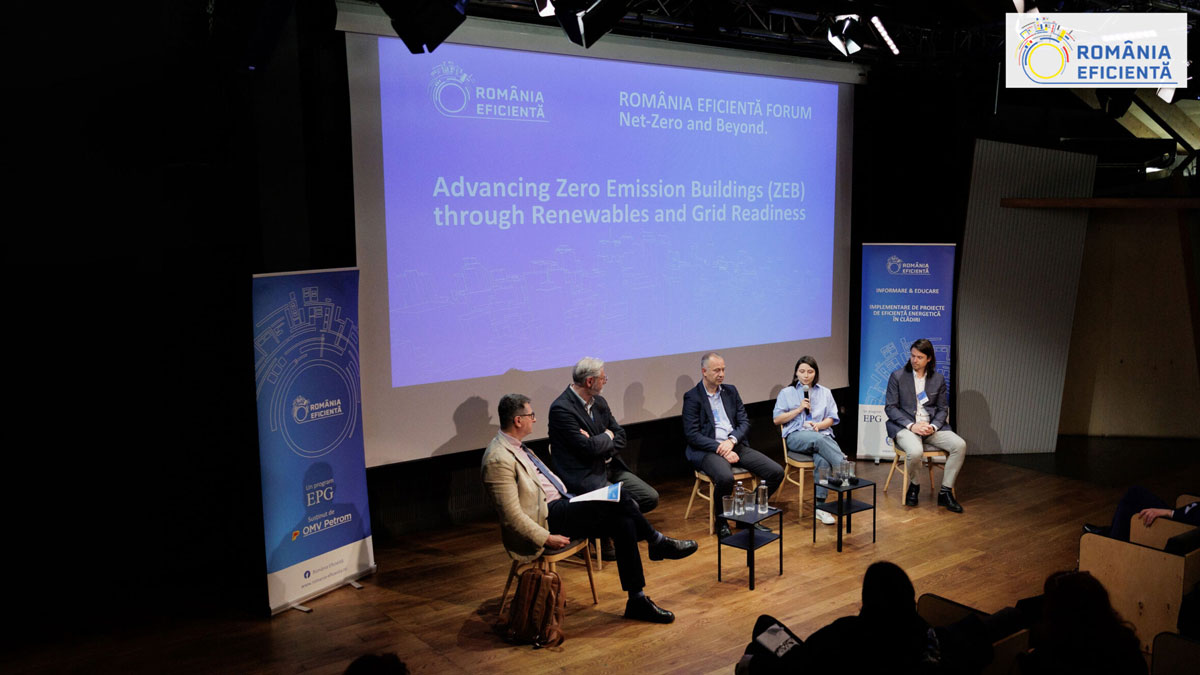
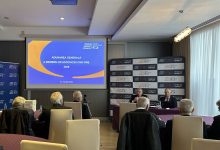
The Romania Eficienta Forum, a leading regional event in the field of energy efficiency in buildings, which took place on May 26 in Bucharest, focused on the fair and just transition to a climate-neutral future for the built environment.
Radu Dudau, President of the Energy Policy Group (EPG) and coordinator of the Romania Eficienta program, explained the choice of this topic in the context of the upcoming introduction of ETS 2, the EU Emissions Trading System that will have a profound influence on the buildings, transport and small industry sectors.
“ETS 2 will change the rules of the game. It is essential to understand the implications and to prepare in advance for the transformations to come,” Radu Dudau said.
Christina Verchere, CEO of OMV Petrom, emphasized the role of the Forum as a space for dialogue between experts, dedicated to identifying the best solutions for energy efficiency: “Only by debating the essential issues can we accelerate the efficiency and decarbonization of buildings at the pace necessary to achieve climate goals.”
If the Romania Eficienta 2025 Forum had a motto, it would be: “Only together will we succeed.” Without the involvement of everyone, from decision-makers and experts to local communities, the green transition in the buildings sector cannot move forward.
“Only through well-thought-out solutions, correctly applied and with care for the vulnerable can we build an efficient and equitable future,” Constantin Postoiu, Head of Data Analytics, EPG, pointed out.
Eugen Panescu, architect and Romania’s representative in the Architects’ Council of Europe, called for an integrated approach to energy performance and building renovation: “All actors involved need to understand and take ownership of their role – from the authorities providing the legislative framework and funding, to the professionals providing technical solutions, to the building users who can contribute to reducing energy waste on a daily basis.”
Understanding the benefits is at the heart of this transformation. Zero Emission Buildings (ZEBs) offer comfort, health and significant savings.
“It all starts from a simple question: do we really understand the benefits? The answer will make the difference between stagnation and progress,” said Horia Petran, President of Cluster-PRO nZEB.
Eliza Barnea, Just Transition Campaign Coordinator, Bankwatch Romania, highlighted the essential role of people in this process: “People are at the heart of the energy transition. Informed, involved and listened to, they can turn projects into reality. Constant communication, from the ground up to the national level, is the key to real collaboration between authorities and communities.”
In terms of financing, Romania has access to substantial EU funds for energy renovation of buildings. However, moderate renovations are the norm, while more extensive renovations with real impact are still rare.


“The challenge is to use the available resources to their full potential,” Mihai Moia, ROENEF Executive Director, said.
Catalin Lungu, President of OAER, emphasized that European funds are important but insufficient: “Public-private partnership is the key to sustainable transformation. The Efficient Romania program demonstrates what can be achieved with the involvement of private capital: schools renovated to nZEB standards, better conditions for students and teachers, more energy efficient communities.”
Finally, Tobiasz Adamczewski, Vice-President of the Polish Energy Forum, proposed an innovative mechanism: “Reinvesting decarbonization revenues in decarbonization projects could provide partial self-financing of the transition. It’s an idea with major potential.”