
Oil & Gas in 2026: From Crisis to Technological Trends

Member countries of the International Energy Agency (IEA) have begun releasing strategic oil reserves—a total of 426 million barrels, mostly crude oil—which are set to be made available, according to an IEA statement on March 19, 2026.
The released reserves, which “have begun to be made available,” will be “primarily crude oil, while contributions from Europe will mainly take the form of refined products,” specified the IEA, which has 32 member countries.
The organization had decided in principle to release approximately 400 million barrels of oil to mitigate the price surge triggered by the war in the Middle East. This is the sixth release of strategic reserves in the history of the institution, which was established more than 50 years ago, and is also the largest ever carried out.
According to detailed data published by the IEA, the United States will contribute the most, with over 172 million barrels, followed by Japan with nearly 80 million barrels. Next are Canada (23.6 million barrels) and South Korea (22.5 million barrels). In Europe, the largest contributors are Germany (19.5 million barrels), France (14.6 million barrels), and the United Kingdom (14 million barrels).
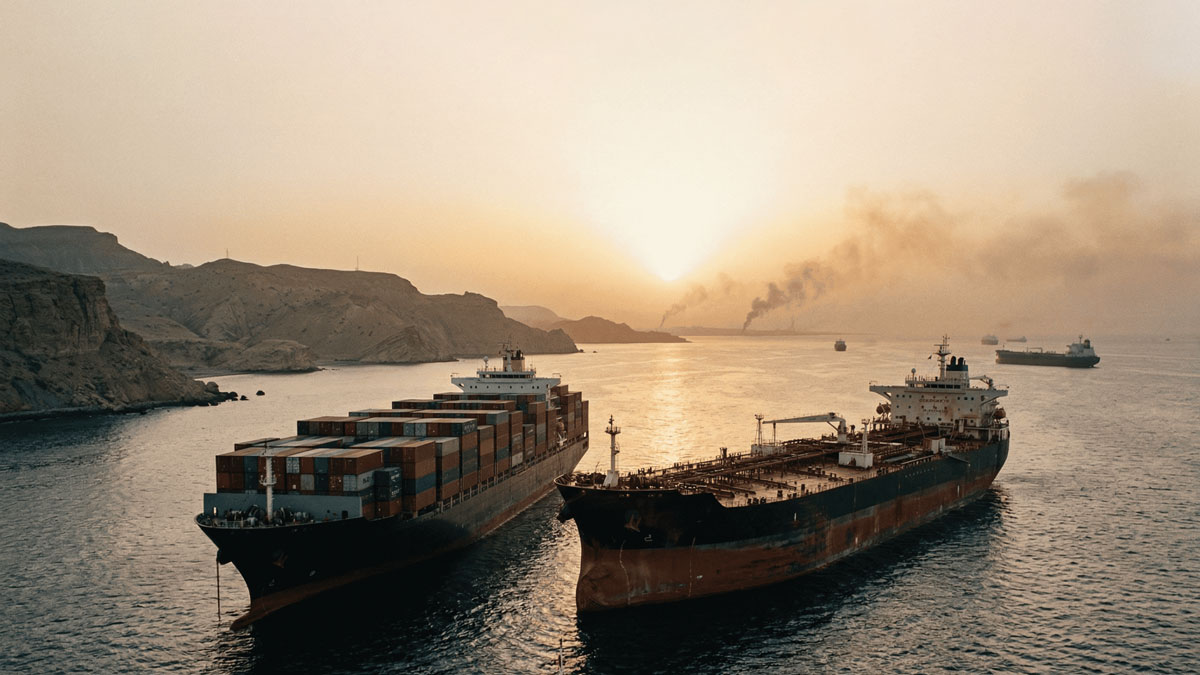
The announcement comes as the war in the Middle East has taken on a new dimension, with energy infrastructure coming under attack, leading to a sharp rise in hydrocarbon prices.
Since the start of the war in the Middle East, the price of North Sea Brent crude oil, the global benchmark, has risen by approximately 50%. WTI, its U.S. equivalent, has risen by nearly 44%.
Key players in the oil sector. Brand strategies. The energy transition: from constraint to opportunity
The oil industry is dominated by a few established giants. Among the leaders are well-established companies such as ExxonMobil, Chevron, Shell, and bp, which hold a dominant position on every continent. Their influence is not limited to oil production; they are also involved in refining, distribution, and various related activities that allow them to diversify their revenue streams. However, a shift is underway with the emergence of new companies—often smaller but equally influential—particularly in regions with largely untapped oil resources. Companies from developing countries and national oil companies are beginning to make their mark on the global market thanks to innovative strategies and a better adaptation to local needs.
Carbon capture and storage and renewable energy projects



Faced with growing environmental pressure and geopolitical challenges, oil companies are tending to diversify their operations. But how are they doing it? Diversification is taking place through investments in renewable energy and strategic partnerships with technology companies specializing in energy efficiency.
To maintain their influence, they are developing strategies aimed at maximizing their brand’s impact in a market increasingly concerned with environmental issues. These strategies and transformations allow both established and new players to gain market share at a time when the energy transition is not just a constraint, but also an opportunity. We’re talking about adaptability for those who want to remain competitive in today’s oil industry.
Transition strategies vary considerably from one company to another. Some companies are innovating in carbon capture and storage to reduce their carbon footprint, while others are investing in renewable energy projects. It is extremely important for these companies to adapt their business models to the new reality.
Oil and gas technology: the shift from standalone digital tools to integrated digital operations platforms
The biggest trends of 2025 focused on operational resilience, compliance automation, AI-assisted workflows, and seamless IT/OT integration—without replacing core systems such as SAP or SCADA.
New technologies can help oil and gas companies overcome disruptions and remain competitive in an ever-changing industry. They can optimize maintenance processes and facilitate a smooth transition to net-zero emissions.
Oil and gas technology today
Oil and gas technology refers to integrated systems, digital tools, and automation platforms that enable exploration, production, refining, and distribution operations across the entire energy value chain. Modern technology in the oil and gas industry covers two critical areas:
- Information Technology (IT): Enterprise systems that manage data, analytics, finance, and business workflows
- Operational Technology (OT): Field-level systems that control equipment, sensors, pipelines, and physical processes.
Today’s oil and gas technology connects these areas through digital workflows that streamline permit approvals, supplier management, maintenance scheduling, and regulatory reporting. This convergence addresses persistent industry challenges: compliance with evolving environmental and safety regulations, operational safety in hazardous environments, and the need for human automation—where critical decisions require expert judgment before execution.
Unlike fully autonomous systems, human-in-the-loop automation ensures that field engineers, safety officers, and compliance teams oversee high-stakes processes while eliminating manual bottlenecks. This balance between speed and control defines the current state of technology in the oil and gas industry.
Key technological trends in the oil and gas industry
- Development of low-code and no-code applications
The rush to digitize and undergo a digital transformation has forced oil and gas companies to adopt a digital-first business strategy. Low-code/no-code (LCNC) platforms will dominate companies’ IT stacks in 2026. American research and advisory firm Gartner reports that by 2025, 70% of new applications must be built using LCNC tools. Low-code and no-code tools can fuel digital transformation efforts, enabling well test operators, offshore technicians, and oilfield workers to build the solutions they need without waiting for IT support. They can develop solutions that allow them to collaborate, track projects, and work remotely.
Companies that quickly adopt LCNC platforms, such as Kissflow Low Code and Kissflow No Code, will become leaders in the oil and gas technology and industry. LCNC tools enable faster application deployment and reduce process completion times.
Thus, to remain competitive, organizations must rethink their oil and gas business processes by adopting automation, data-driven insights, and agile workflows.
- Robotic Process Automation (RPA)
According to Statista, the market value of automation technology in the oil and gas sector is projected to reach approximately $42 billion by 2030. One of the most widely adopted automation technologies is Robotic Process Automation. The technology automates repetitive, rule-based tasks such as document processing, data entry and reporting.
When an oil and gas well is shut in, RPA significantly reduces shut-in time and minimizes human error. The technology also automates supply chain processes, such as procurement transactions, improving cycle times and boosting overall efficiency.
In 2026 and beyond, more and more oil and gas technology companies will use drones and submersible robots in offshore drilling to inspect inaccessible areas. Robots enhance worker safety and minimize errors during the installation or repair of parts in hazardous locations.
- Artificial Intelligence (AI) and Machine Learning (ML)
AI offers significant benefits across the entire energy production value chain. Oil and gas companies use the technology to assess the value of reservoirs and customize drilling plans based on the geology of a given area. It also helps them evaluate the risks associated with each well.
AI is also used during the search for oil drilling sites to analyse seismic data and provide risk information. The data can be combined with historical data to help oil and gas companies determine oil levels in reservoirs. AI can improve predictive asset maintenance by analysing data from machinery on offshore drilling platforms.
Machine learning provides oil and gas companies with useful insights from data generated during oil and gas operations. They can use the data to improve operational efficiency and decision-making. The two technologies will continue to provide useful insights for improved efficiency.
- Devices (IoT)
The IoT has ushered in a new era of connectivity; devices and machines now communicate seamlessly to create a more efficient and productive environment.
The technology has had a significant impact on the oil and gas sector, enabling companies to optimize processes, enhance safety and security, and reduce costs. IoT devices, such as sensors, enable remote monitoring, real-time data collection, and better resource management.
In 2026, more oil and gas companies will use IoT devices to monitor pumps, pipelines, and filters to prevent costly leaks. No one will need to manually check the systems, so workers will only be called in when anomalies occur. IoT sensors will provide real-time data around the clock to give workers better control over performance metrics.
- Advanced Analytics and Big Data
The analysis of variables and condition-based monitoring enables oil and gas companies to design scenario-based simulations and predict future maintenance requirements. In this way, they can perform the necessary maintenance before equipment fails.
The use of big data and advanced analytics will continue to grow. Oil companies will use these two methods to customize predictive models and optimize drilling processes. Customized predictive models can help companies optimize processes and improve decision-making.
It is typically difficult to verify data in the oil and gas industry, as the data comes primarily from underground facilities. Some data is also collected by human operators and may be inaccurate. Data analytics tools can identify patterns among hundreds of variables that are constantly changing. These can improve production efficiency, risk assessment, and operational excellence, and can reduce production costs.
- Cloud Computing and Edge Computing
Cloud computing puts data control in the hands of oil and gas companies. This enables them to gain better analytical insights, achieve more efficient production, and ensure safer drilling. The technology allows companies to scale quickly, accelerate innovation, and streamline operations.
Edge computing, on the other hand, enables real-time data analysis. Oil and gas companies can use the technology for faster remote data processing at exploration sites, drilling sites, and distribution pipelines.
- Augmented Reality (AR) and Virtual Reality (VR)
A McKinsey study on the oil and gas sector found that oil and gas companies could reduce costs by up to 25% per barrel if they used digital solutions such as augmented reality and virtual reality.
The application of AR in the oil and gas sector has demonstrated significant potential. For example, AR overlays, such as smart glass hardware, provide visual indicators and guidance to workers, helping to improve their efficiency.
They also provide operating instructions for machinery and process steps. AR headsets offer hands-free instructions and display tools and parts, increasing maintenance efficiency.
VR technology is equally important in oil and gas, as it accelerates product design, reducing the development time for critical oil and gas equipment. It eliminates the need to manufacture various prototypes for testing. Virtual reality enhances training, simulation, visualization, inspections, and remote assistance.
Oil and gas companies can create digital twins to replicate operations at refineries and oil fields. VR headsets provide hands-on training, offering a safer and more efficient way to apply theoretical knowledge. Enabling developer mode on VR headsets such as the Quest 2 unlocks features like sideloading apps and customizing settings, enhancing functionality for custom training applications.
- Blockchain Technology
Blockchain secures and simplifies the complex processes of the oil and gas supply chain and introduces transparency. Processes such as oil and gas trading, inventory control, shipment tracking, invoicing, and payments become easier to manage.
The U.S. is now using a blockchain-based platform to securely manage crude oil transactions. Last year, the technology continued to increase transparency, security, and efficiency in transactions, supply chain management, and royalty distribution within the oil and gas sector.
The central role of oil companies in the global economy
Oil companies play a vital role in the global economy, serving as a major source of revenue for many exporting countries as well as a key player in the energy market. Their influence extends far beyond financial markets, directly impacting various sectors such as the chemical industry, transportation, and electricity generation. Indeed, oil companies are not merely suppliers of crude oil. They are part of a complex chain of production, refining, distribution, and sales that supports, directly or indirectly, the entire global economy. This creates a significant multiplier effect that helps stimulate economic growth in both producing and consuming regions.
Fluctuations in oil prices influence national economies, energy policies, and even geopolitical relations between countries. The ubiquity of oil in the global economy highlights the challenges oil companies face in meeting this energy demand while pursuing sustainable development strategies.
The bottom line? To better understand the economic stakes for these companies, it is essential to also consider the technological innovations that are reshaping their role.
Importantly, the use of artificial intelligence now allows oil companies to better anticipate and adapt to market fluctuations.
The future of oil companies will hinge on how they can redefine themselves and thrive in the context of a global energy transition, as well as crises such as the current one.