
UAE to Quit OPEC: The Beginning of the End for the Organization, or a Rebalancing of the Energy Order?

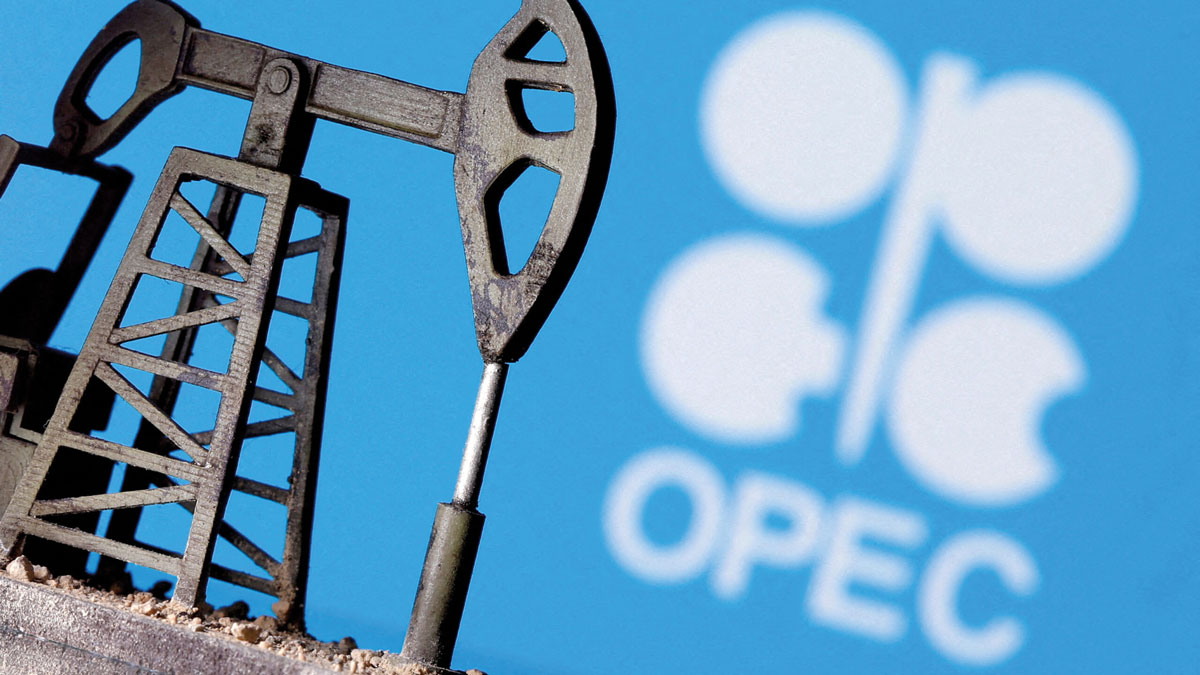
The United Arab Emirates’ decision to leave OPEC, announced at a time of heightened geopolitical tension, cannot be dismissed as merely a symbolic gesture; rather, it sends a powerful signal about the structural transformations taking place in the global energy market.
At a time when Europe is once again paying the price for its dependence on imported fossil fuels, and strategic routes such as the Strait of Hormuz are affected by conflict, this move is shifting the balance in an already fragile system.
Officially, Abu Dhabi’s argument is one of flexibility, as Energy Minister Suhail al-Mazrouei spoke of a “political decision” made following a careful analysis of energy strategies, which will allow the Emirates to reach its production target of 5 million barrels per day by 2027, without the constraints imposed by OPEC quotas. Unofficially, however, the decision reflects pent-up frustrations: years of restrictions imposed by Saudi Arabia, while other members—such as Iraq or Russia—have frequently exceeded their quotas without facing any real consequences.
A blow to OPEC and Saudi Arabia
The impact on OPEC is more profound than it seems at first glance, as the United Arab Emirates is not just any member. Along with Saudi Arabia, they are one of the few producers with significant spare capacity—that critical “buffer” that helps stabilize the market in times of crisis. With the UAE’s withdrawal, OPEC loses one of its pillars of stability, and its ability to manage global supply and maintain a minimum price floor becomes more fragile. Saudi Arabia remains the de facto leader, but its influence has waned. In the long run, however, this is a systemic problem, since without cohesion, the organization risks losing its relevance.
A more volatile market, less control
Paradoxically, in the short term, the market did not react dramatically, and the reason is simple: the geopolitical context is the dominant factor. The near-total closure of the Strait of Hormuz and the disruption of oil flows have already pushed prices higher, overshadowing the impact of the UAE’s decision. But in the medium and long term, the implications are clear: less coordination among major producers, a reduced ability to intervene in the event of a surplus or deficit, and, consequently, greater price volatility. And in a world where demand can fluctuate rapidly—whether for economic reasons or due to the energy transition—the lack of a coherent balancing mechanism becomes a major risk.
The UAE’s withdrawal is not an isolated case; Qatar, Ecuador, and Angola have taken similar, albeit tentative, steps in recent years. The list could include Kazakhstan, Nigeria, or even Venezuela, each with its own reasons—ranging from a desire for autonomy to internal strategic shifts.
The underlying issue is a structural one: countries that have invested heavily in production capacity are no longer willing to sit “on the sidelines” to prop up global prices. We can say that in a competitive global economy, every barrel counts. And when the rules aren’t followed uniformly, the temptation to opt out grows.



Geopolitical context plays a decisive role
It is impossible to ignore the context in which this decision was made. The conflict in the Middle East, attacks on shipping, and tensions with Iran have directly affected the UAE’s exports. Even though officials in Abu Dhabi do not explicitly link the withdrawal to these events, the reality is that energy security has become a national priority. In such a context, the freedom to quickly adjust production levels becomes a strategic advantage. Furthermore, the decision can also be interpreted in a global geopolitical context. OPEC’s weakening is, indirectly, a victory for the United States, which has repeatedly criticized the cartel for manipulating prices.
For Europe, this development comes at an extremely sensitive time. The recent energy crisis has shown just how vulnerable the continent is to external shocks. The fact that the EU spent an additional €24 billion on imports without receiving any extra energy is clear proof of this.
The UAE’s withdrawal from OPEC does not solve the problem; it only complicates it. A more volatile market means prices that are harder to predict, and for economies dependent on imports—such as Romania—this translates into uncertainty.
On the other hand, there is also an opportunity. The fragmentation of OPEC is indirectly accelerating the energy transition. Europe is being forced to reduce its dependence on fossil fuels and invest more quickly in locally produced energy.
For Romania, this shift could serve as a catalyst by harnessing the resources of the Black Sea, developing renewable energy capacity, and positioning the country as a regional energy hub—a point frequently emphasized at industry conferences and in statements by officials in the field.
Are we witnessing the dawn of a new energy era?
It would be reckless to say that the United Arab Emirates’ withdrawal from OPEC is merely a one-off decision. Rather, we can see it as a symptom of a changing world, in which old structures no longer function as effectively as they once did.
OPEC, as we know it, is entering a phase of redefinition. It is not certain that it will fall apart, but it is clear that it will become less predictable. In this new context, adaptability becomes the key, and countries that manage to diversify their sources, invest in infrastructure, and reduce their dependence will have a competitive advantage.
The rest will continue to pay the price—sometimes literally.