
Tarnita-Lapustesti Hydropower Plant: Back to Square One in Partnership with EDF

The shareholders of Hidroelectrica have decided to set up a joint venture with French energy giant EDF to develop the Tarnita-Lapustesti pumped storage hydropower plant, a project that has been under discussion since before 1989. In the first phase, the project company will collect data on site, conduct an initial assessment of the land, and prepare a pre-feasibility study, either internally or by hiring an external consultant.
By resolution adopted at the Extraordinary General Meeting of Shareholders of Hidroelectrica, it was decided that “SPEEH Hidroelectrica SA, together with EDF Power Solutions International, would establish a joint venture company (JVC) with equal shares of 50% each.”
The purpose of this joint venture is to launch the Tarnita-Lapustesti pumped storage hydropower plant project. Insofar as, following the pre-feasibility phase, the parties identify mutually beneficial solutions for the development of the project and decide to continue with the project and move on to the second phase, with a view to preparing the final investment decision, as well as whether they will continue to finance, construct, operate, and maintain the project, the two companies will amend the shareholders’ agreement accordingly by means of an addendum.
In the first phase, the project company will collect data on site (lower reservoir + possible upper reservoirs), conduct an initial assessment of the land, and prepare a pre-feasibility study, either internally or by contracting an external consultant. The budget for this first phase is EUR 400,000, shared equally between Hidroelectrica and EDF Power Solutions. The old Tarnita-Lapustesti hydropower plant project envisaged that it would be built over a period of five to seven years, 30 kilometres from the city of Cluj-Napoca, on the Somesul Cald River valley.
Support revenue scheme related to the project
“In the event that the parties decide to move the Project forward to Phase 2, with respect to the current provisions of the SHA (shareholders’ agreement – ed.), the parties will mutually agree to adjust the necessary chapters (control, avoidance of possible events of default, possible exit decisions) in order to develop specific mechanisms that reflect the maturity of the project and the substantial level of CAPEX that will be required in Phase 2,” Hidroelectrica states.
In addition, EDF requested the adoption of a regulatory framework for the implementation of a revenue support scheme related to the project (capacity booking, CfD, feed-in tariff) to justify the decision to continue the project, Hidroelectrica further states.
A final investment decision (FID) will only be made after obtaining security clearance for these investments (which may not be the case) and, above all, after the parties have satisfactorily analysed Romanian public and sectoral procurement legislation regarding any constraints imposed by these regulations and how these provisions apply to the project.
Strengths and weaknesses of the project



The operating cost of pumped storage hydropower plants is low compared to other types of power plants. Furthermore, a PSH has a long lifespan of approximately 80-100 years, according to a presentation of the project by the National Forecast Commission in 2019. PSH can have an installed capacity of 1,000-3,000 MW and a fast response time, relative to installed capacity, of a few seconds. The efficiency is about 75-80%. Pumped storage plants are immune to oil, gas or coal price increases and do not require fuel imports.
A disadvantage is the dependence of the design on the geomorphology of the site. For the most part, geological constraints are the cause of difficult construction.
Feasibility study update, failed attempts
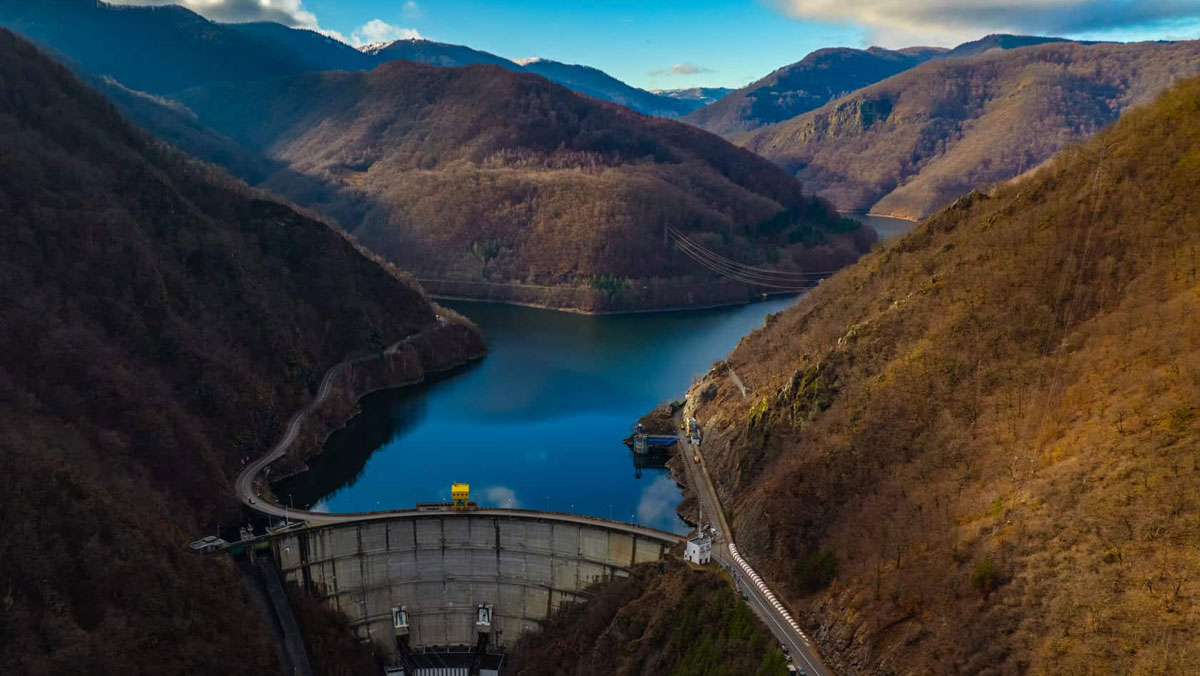
In 2023, Societatea de Administrare a Participatiilor in Energie (“SAPE”) took steps to relaunch the pumped storage hydropower plant (“PSH”) project located in Tarnita and Lapustesti on the Somesul Cald River in Cluj County, which will use water from the Tarnita and Lapustesti Lakes. This power plant would be the first of its kind in Romania and will significantly contribute to the stabilization of the national power grid, especially in the context of the integration of renewable energy sources. To this end, it launched procedures to update the feasibility study through a competitive bidding process on October 30, 2023. This process was declared unsuccessful and cancelled because no bidder submitted a compliant offer. In January 2024, SAPE launched a new procurement procedure for the same feasibility study, extending the deadline for submitting bids until June 17, 2024, without a conclusive result.
Provisions of the old draft
The old Tarnita-Lapustesti hydropower plant project envisaged that it would be built over a period of five to seven years, 30 kilometres from the city of Cluj-Napoca, on the Somesul Cald River valley. According to the project, Tarnita-Lapustesti PSH had an installed capacity of 1000 MW in four reversible motor-generator groups, each with a capacity of 250 MW; it will produce 1625 GWh/year of electricity and consume 2132 GWh/year in pumping, with a conversion coefficient of 0.76, similar internationally to the most modern pumping stations in operation. The investment will provide around 3,000-4,000 jobs on site during the construction period and around 100 permanent jobs for operation and maintenance after commissioning.
By comparison, Nuclearelectrica, with 1,400 MW of installed capacity on a single platform (Cernavoda), had 1,950 employees (SER 2018-2050). The investment costs were estimated at over EUR 1 billion in the early 2010s.
The existence of the Tarnita-Lapustesti pumped storage hydropower plant (PSH) in the National Energy System will optimize the operation of thermal power plants and enable some hydropower plants, which are currently used for regulation in the National Energy System, to operate optimally and consistently, with reference mainly to the Iron Gates I hydropower plant.
Conclusions of the study conducted by Deloitte in 2010
Broadly speaking, the Deloitte study states:
- For Romania, hydropower potential represents a sustainable alternative for the development of the energy sector, given the limited resources of energy raw materials and the need to obtain cheap energy that does not produce greenhouse gases.
- The Tarnita-Lapustesti PSH project is essential in the context of a continuously growing portfolio with uncontrollable production, which requires the installation of additional balancing capacities, which will be remunerated on system technology service markets, capacity markets, and also on the balancing market.
- The plant would be a strategic provider of energy/system services in northwestern Romania, an area with a deficit in electricity generation.
- Tarnita-Lapustesti PSH would become an important provider of system services in Romania and, possibly, in several neighbouring countries.
About EDF Power Solutions International
Resulting from the merger of EDF Renewables with the International Division of the EDF Group, EDF Power Solutions International is a global energy company that brings together the expertise of both companies to provide renewable and low-carbon energy solutions worldwide, operating in over 25 countries with approximately 10,000 employees. The company develops, builds, and operates energy facilities, such as wind farms and solar power plants, while also providing services for energy storage, grid optimization, and carbon footprint reduction, including electric and hydrogen mobility solutions. Its portfolio covers the entire value chain of renewable and low-carbon energy, including development, construction, and operation of power generation facilities (wind, solar, hydro, biomass); flexible energy supply solutions, such as battery storage and pumped hydro; reducing customers’ carbon footprint through services such as electric mobility, hydrogen use, and off-grid systems.