
Kazakhstan’s First Nuclear Power Plant
Strong Signal for the Region and Strategic Opportunity for Romania

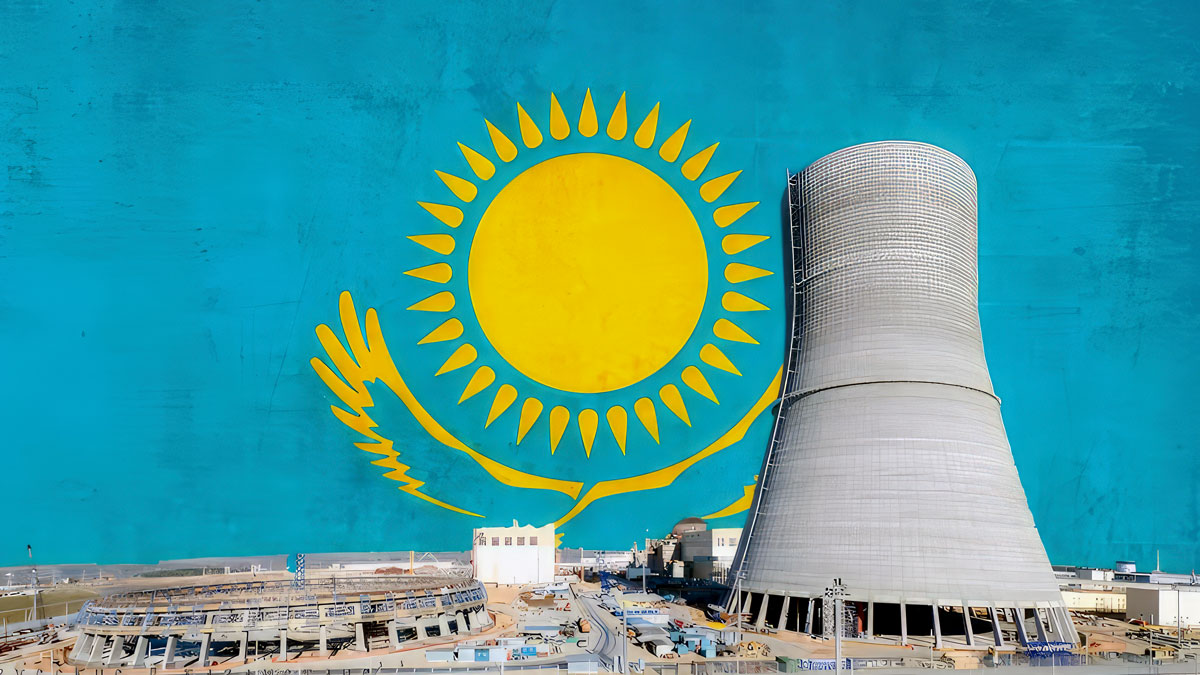
Kazakhstan’s Nuclear Energy Agency announced in mid-June that Russia’s Rosatom had been appointed to lead the international consortium that will build the country’s first nuclear power plant, a project with significant regional implications.
The decision follows a rigorous selection process that analysed proposals from other leading companies in the field, such as EDF (France), China National Nuclear Corporation, and Korea Hydro & Nuclear Power.
This choice has profound repercussions on the energy landscape in Central Asia and Eastern Europe and also opens an important window of opportunity for Romania, which is in the process of modernizing its nuclear capabilities and consolidating its position as a regional energy hub.
Kazakhstan: the energy paradox and Rosatom’s choice
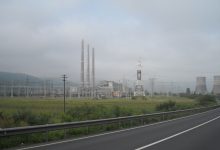
Despite being the world’s largest uranium producer, Kazakhstan faces serious problems with domestic electricity production. The country generates much of its electricity from coal and the energy infrastructure is outdated and inefficient.
The construction of the future plant, approved following a public referendum last fall, is planned near the abandoned village of Ulken, on the shores of Lake Balkhash, one of the most strategic locations in the south of the country.
The investment aims not only to diversify domestic energy sources, but also to strengthen energy independence in a region beset by geopolitical instability and global energy transition.
Expanding Rosatom’s influence in the region
Kazakhstan’s decision to collaborate with Rosatom confirms Russia’s increasingly active trajectory in the civilian nuclear field in the former Soviet space.

In addition to Kazakhstan, Uzbekistan has already signed an agreement with Rosatom to build a small modular reactor (SMR) nuclear power plant, and Kyrgyzstan has been offered a similar project.
With these investments, Russia is expanding its energy and strategic influence over a key region that is rich in resources but dependent on external technologies to develop its nuclear infrastructure.
Regional implications: opportunity for Romania
For Romania, this acceleration of nuclear investment in Central Asia sends a double signal: on the one hand, it reflects the growing interest in nuclear energy as a stable, clean, and strategic source; on the other hand, it highlights the urgent need to advance its own nuclear projects, especially in the complex regional context, where energy is increasingly becoming a geopolitical tool.
Romania has a solid tradition in the nuclear field and a strategic partnership with the United States, which has resulted in plans to expand the Cernavoda Nuclear Power Plant (Units 3 and 4) and the implementation of small modular reactors (SMRs).
Furthermore, Romania can benefit significantly from this new global competition by accelerating the modernization of existing facilities, including the refurbishment of reactor 1 at Cernavoda, accessing European and transatlantic funds for green and secure energy infrastructure, and strengthening vocational training and technological expertise in partnership with countries such as the US, Canada, and France. Moreover, our country can position itself as a regional supplier of nuclear know-how and equipment to other Balkan and Eastern European countries.
With Kazakhstan—a world leader in uranium production—choosing to develop its nuclear infrastructure with Rosatom’s support, Europe, and countries such as Romania in particular, must adapt quickly to the new energy geography.
Through serious investments in modernizing and expanding nuclear capacities, but also by taking an active role in developing SMR technologies, Romania has the opportunity to become a key player in the regional energy transition, while contributing to reducing energy dependencies and increasing security in Southeast Europe.
The events in Kazakhstan are not just about Central Asia, they are a barometer of where the world is moving in the energy field. And Romania must be ready to respond with vision and action.