
EUR 20bn for the Development of Romanian Nuclear Energy

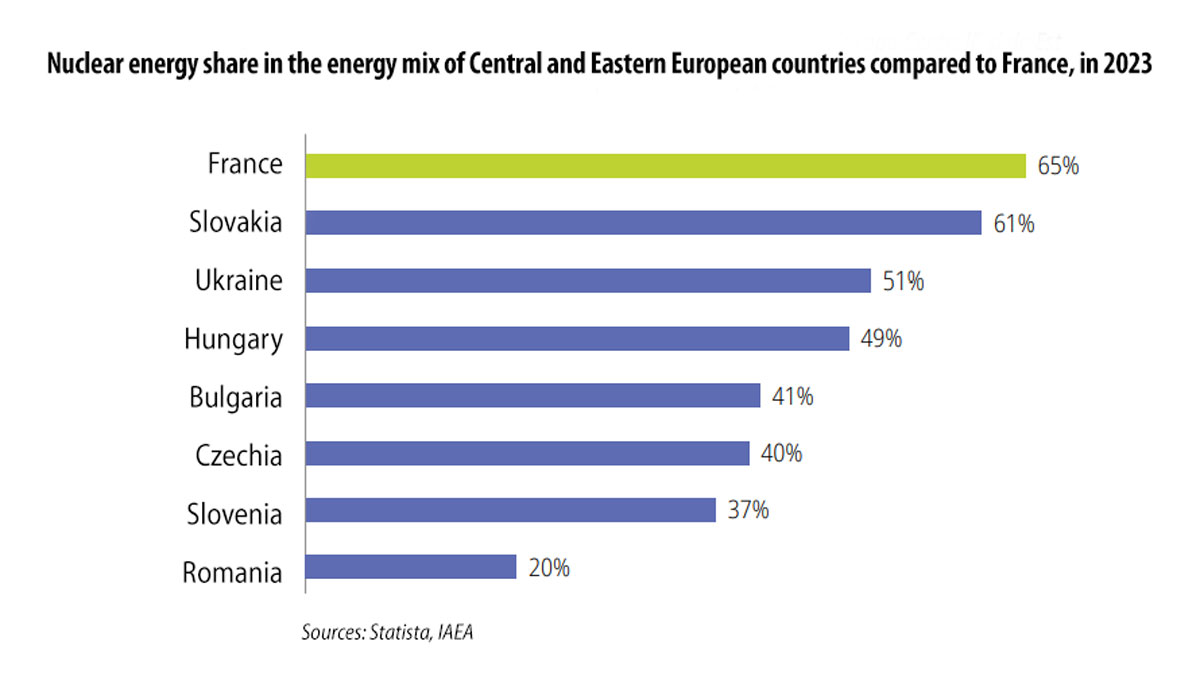
The General Meeting of Shareholders of Nuclearelectrica (SNN), the operator of the Cernavoda nuclear power plant, approved in September the company’s investment strategy for the period 2025–2030, with a view to 2035. SNN’s strategic investment portfolio is estimated at EUR 20 billion over the next decade.
Currently, the European Union recognizes nuclear energy as an essential pillar in the transition to a climate-neutral economy, alongside renewables.
With investments of more than EUR 15 billion, Nuclearelectrica aims to increase and diversify its production capacity, including new units and advanced technologies. The main investment programs included under this strategic direction are the development of units 3 and 4 of Cernavoda NPP and the development of Small Modular Reactors (SMR).
With investments of over EUR 4.6 billion, SNN is also modernizing and maintaining its existing infrastructure, ensuring the optimal and safe operation of the nuclear power plant.
Main investment programs
The main investment programs included under the strategic direction are:
- Refurbishment of Unit 1 of Cernavoda NPP
- Development of the Spent Fuel Intermediary Storage Facility (ISFSF)
- Development of the Emergency Response Centre
- Modernization and development of the nuclear fuel facility
- Modernization, retrofitting and development of the uranium concentrate processing plant
- Transformation and digital resilience.
Development of units 3 and 4 of Cernavoda NPP
The development program for units 3 and 4 at Cernavoda is being carried out by the project company EnergoNuclear (EN), which was established in 2009 and has the legal status of a wholly owned subsidiary of SNN, as sole shareholder. The development of these units is a strategic program of national interest that contributes both to achieving Romania’s strategic energy security objectives, an essential component of national security, and to promoting national interests in a global and regional context.
The project consists in the finalization of the construction and commissioning of 2 units of minimum 724 MWe installed each, using CANDU (Canada Deuterium Uranium) nuclear technology. The engineering, procurement and construction management (EPCM) agreement for the development of reactors 3 and 4 at Cernavoda was signed in November 2024, during the UN Climate Change Conference COP29 in Baku, between EnergoNuclear and the FCSA Joint Venture.

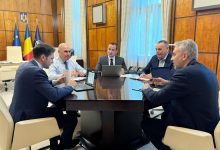
The agreement, with an estimated value of around EUR 3.2 billion, is structured in two phases: the first, the LNTP, lasting 24-30 months, followed by the FNTP (Final Notice to Proceed), which will last 80-84 months, after the final investment decision has been made and the commercial terms have been established. This agreement foresees the provision of engineering, procurement, construction management, technical assistance and quality assurance services until the commissioning of the units. FCSA JV consists of leading international companies: Fluor (Fluor B.V., Fluor Energy Transition Inc.), Candu Energy (subsidiary AtkinsRéalis), Ansaldo Nucleare, S&L Engineers and Sargent & Lundy Energie.
Development of small modular reactors (SMRs)
The development of small modular reactors is being carried out by the project company RoPower Nuclear, established in 2021 and owned in equal shares by SNN and Nova Power & Gas (a member of E-INFRA).
The SMR program aims to develop electricity generation capacity in a small modular reactor nuclear power plant. This investment consists of the completion and commissioning of six NuScale Power Module NPM™ units at the site of the former Doicesti thermal power plant, with a gross installed power of 462 MWe (6 x 77 MWe).
The first major milestone of the project was reached in October 2022 with the signing of the first major contract, the Front-End Engineering & Design (FEED 1) contract with NuScale in Washington, partially funded by a US Trade and Development Agency (USTDA) grant that ran from November 2022 to July 2023. In December 2022, the contract was signed for the development of the Licensing Basis Document with a view to developing and ensuring the necessary and appropriate legislative framework for the implementation of the SMR project in Romania.
The final investment decision will be made after the prerequisites have been met, subject to obtaining the necessary authorizations and approvals, including the site permit to be issued by CNCAN and subsequent site approval. By implementing this strategy, the SMR project in Doicesti is positioned as a key solution in Romania’s energy transition, contributing to strengthening energy security, reducing greenhouse gas emissions, and promoting the country’s sustainable development, according to the SNN strategy.
Refurbishment of Unit 1 of Cernavoda NPP
Unit 1 was commissioned in 1996, marking Romania’s debut in commercial nuclear power production. The projected lifetime of Unit 1 at Cernavoda is 210,000 operating hours at rated power. Assuming an average capacity factor of 80%, this corresponds to approximately 30 years of operation.
The main factors limiting the lifetime of the unit are wear and degradation of critical components, such as fuel channels, calandria tubes, feeders, and the reactor building structure. These elements are subject to a continuous monitoring and evaluation process to ensure the safety and performance of the plant throughout the entire period of operation.
The design, procurement, and construction (EPC) contract was signed with the consortium of Atkins Realis, Canadian Commercial Corporation, Ansaldo Nucleare, and Korea Hydro & Nuclear Power, and the scope of the contract covers the following categories of work: retubing—replacement of reactor components that have reached the end of their service life after the first operating cycle of the plant; refurbishment – design modifications, replacement of major equipment, inspections; infrastructure – construction of buildings, storage platforms, road platforms, etc.
The value of the refurbishment program is estimated at approximately EUR 3.5 billion.
Development of the Spent Fuel Intermediary Storage Facility (ISFSF)
The implementation of the ISFSF program aims to expand the dry interim storage facilities for spent nuclear fuel generated by Units 1 and 2 at Cernavoda NPP, which is an essential condition for the authorization and reauthorization of the plant’s operation.
The interim storage is modular, allowing construction to be phased according to storage needs as fuel in the unit storage pools is transferred after the minimum six-year period. The project provides for the construction of 37 MACSTOR concrete modules, which will progressively provide the necessary storage capacity for the spent fuel periodically discharged from the reactors. The MACSTOR modules are an advanced and safe solution for the storage of spent nuclear fuel, designed to meet the highest international standards of safety and efficiency. These modules have a robust monolithic reinforced concrete structure designed to integrate 20 cylindrical metal enclosures. Each cylinder holds 10 baskets containing bundles of spent nuclear fuel. After filling, the cylinder is sealed with a concrete plug and a welded lid, ensuring maximum insulation and safety. The sealing process is finalized and verified by the International Atomic Energy Agency (IAEA), ensuring compliance with the most stringent global regulations on spent nuclear fuel storage.
The implementation of this project aims to extend the dry storage capacity of spent fuel over a period of 50 years, with the possibility to extend it up to 100 years. The expansion of the spent fuel storage facility with MACSTOR 400 modules was planned to begin with the contracting of works for modules in July 2025, with each module to be completed and commissioned gradually from May 2027 to March 2033, ensuring the necessary storage capacity for the future. The value of the program is over EUR 270 million.
Refurbishment of the uranium concentrate processing plant
Another strategic objective is the Modernization, retrofitting and development of the uranium concentrate processing plant.
The mission of the Uranium Concentrates Processing Plant – Feldioara is to ensure the maintenance of SNN’s strategic balance regarding the access to internal and external primary nuclear energy resources.
The project involves capital investments in the modernization and retrofitting of assets taken over from Romania’s National Uranium Company (CNU) and the operationalization of the Tulghes-Grinties uranium mine.
At company level, a strategy has been developed and approved that aims to constitute a coherent technical and economic approach, aimed at substantiating the strategic decisions necessary to ensure the complete nuclear fuel cycle and control of SNN costs, as a necessary component of strengthening its security regarding access to primary nuclear energy resources.
The implementation strategy includes:
- Taking over and putting into operation within FPCU – Feldioara S.R.L. the plant for purifying and converting technical uranium concentrates into sinterable uranium dioxide powder
- Transfer and operationalization within FPCU – Feldioara S.R.L. of the concession license for the exploitation of uranium ore in Tulghes – Grinties
- Adopting a strategy to cover consumption needs and intangible stocks of technical uranium concentrates; diversifying supply sources, transport routes, and the range of technical uranium concentrates
- Re-engineering and developing the production capacity of the new plant for purifying and converting technical uranium concentrates into sinterable uranium powder
- Commissioning and maintenance at designed production capacity
- Construction and commissioning of the uranium ore processing plant (from the Tulghes – Grinties underground mine/quarry) in the form of technical uranium concentrates.
Developing, in partnership with other interested companies, projects for the extraction and utilization of domestic or foreign mineral resources used to obtain materials used in the nuclear energy industry (uranium, magnesium, beryllium, graphite, zirconium, REE, nickel, cobalt etc.).
The objectives are to be achieved by:
- Construction of a new uranium ore processing plant – TG Feldioara Plant
- Building a new refining plant for technical uranium concentrates – YC Feldioara Plant
- Opening, preparing and operating a new uranium deposit, concession license for the Tulghes-Grinties mining operation.
Diversification of the production portfolio
The strategy also refers to covering the production deficit in Romania’s national energy system that will occur when reactor 1 of the 700 MW power plant is shut down for refurbishment between 2027 and 2030. “SNN is exploring the possibility of diversifying its portfolio of power generation and energy storage capacities. This analysis is based on the 700 MW production deficit generated during the refurbishment of Unit 1, as well as the increased need to balance the energy system,” the strategy states.
The challenges are amplified by the reduction in baseload production capacities and the increase in the share of renewable sources (wind and solar), without adequate compensation through storage systems. “In this context, SNN is evaluating the implementation of a system consisting of rapid energy generation equipment and storage units, capable of actively participating in the day-ahead market (DAM), the system services market, and the balancing market. The estimated value of the project is around EUR 40 million″, the document says.
“The existence of a gap between the level of domestic electricity production and domestic consumption, household and industrial, provides the opportunity to invest in the fastest possible operationalization of new production capacity to reduce the need for imports,” it was argued in a market consultation document, the company saying that it aims to “sustain the reduction of electricity production capacity, due to the closure of coal-fired power plants, through energy projects with accelerated commissioning and reduced CO2 emissions, according to Romania’s energy strategy.”
SNN is also arguing for the development of domestic gas production, some of which is already in the construction phase of extraction and transmission facilities. “The entry into exploitation of these fields, the next scheduled being Neptun Deep – Romgaz & OMV Petrom, eliminates the disadvantage of imports and provides the gas needed for new energy investments,” the company also says.
What nuclear energy looks like around the world
The World Nuclear Industry Status Report forecasts a decline in nuclear power production in the coming years, after a record high in 2024. Interest in nuclear power has been rekindled recently by several nations in a bid to phase out fossil fuels. However, lack of investment, ageing power plants and project closures make it difficult to maintain last year’s production levels. Specifically, according to the report, global production hit a record 2,677 terawatt-hours in 2024, mainly due to growth in China.
However, to keep it stable until 2030, 44 additional new units will be needed on top of those planned. However, competition from cheaper renewable energy sources and batteries is expected to have a major impact, as investment in renewables was 21 times higher than in nuclear energy last year. At the same time, the capacity added was more than 100 times higher than the net additions to nuclear power. Global installed nuclear capacity currently stands at around 400 gigawatts of electricity (GWe), providing about 10% of the world’s electricity generation.
The European Union recognizes nuclear energy as an essential pillar in the transition to a climate-neutral economy, alongside renewables. The European Union’s Nuclear Alliance, made up of 11 Member States – including Romania – has set itself an ambitious target of 150 GW of installed nuclear capacity by 2050. Achieving this target would represent an increase of around 50% on current installed nuclear capacity and would provide around a quarter of Europe’s electricity needs, as well as supporting low-carbon hydrogen and heat production.