
Strategic Decision in Brussels: Constanta to Become a European Security Hub at the Black Sea

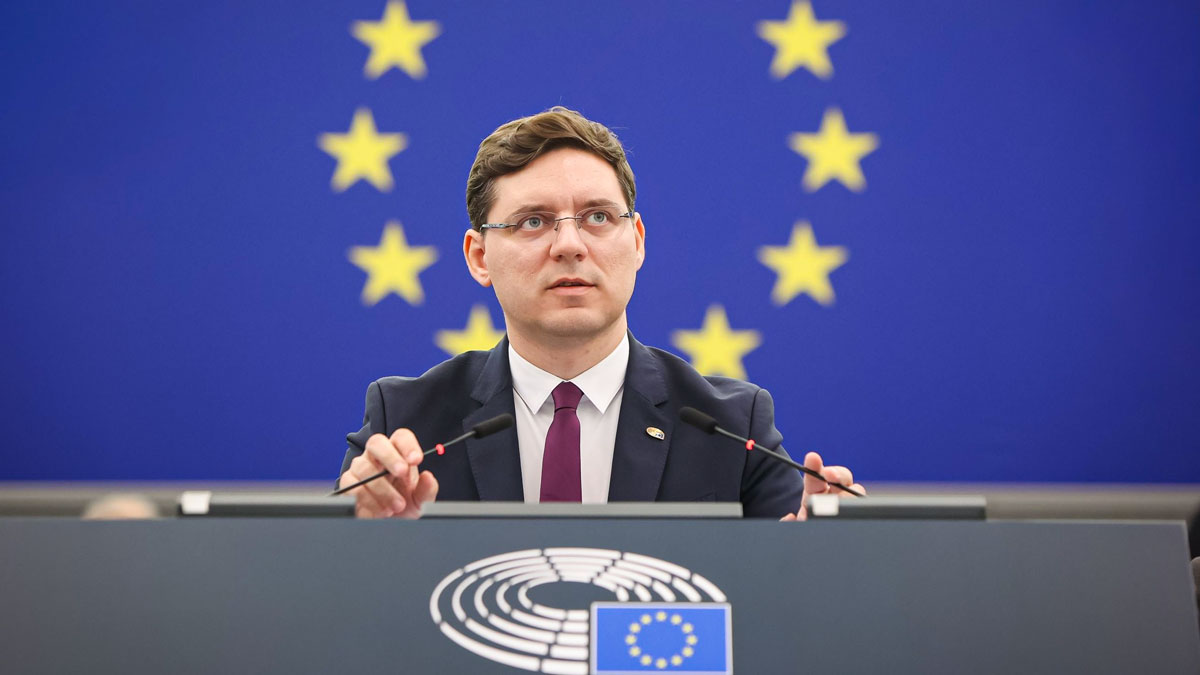
A European maritime security hub for the Black Sea could be established in Constanta, according to a project that has already received official support from the European Commission. The initiator, PSD MEP Victor Negrescu, says that this hub represents not only a strategic opportunity for Romania, but would also ensure better coordination between the European Union, NATO, and the states in the region.
The next step is up to the authorities in Bucharest, who must finalize the technical details for hosting the future hub so that the project can be submitted for final approval by EU Member States.
Major objectives
The objectives of this hub, which enjoys the support of the European Union, are: ensuring the safety of maritime routes and navigation; protecting critical infrastructure (submarine cables, energy facilities, ports); combating hybrid threats (including mines, sabotage, cyber-attacks); strengthening the EU’s rapid response capabilities and coordination with partners (including NATO); and monitoring and countering threats in the Black Sea.
Setting up the hub in Constanta would be a concrete step for the security of the Black Sea and for Romania. “We have received an official response from the President of the European Commission, Ursula von der Leyen, to the initiative we launched regarding the creation of the European Maritime Security Hub at the Black Sea in Romania.
The European Commission’s message is clear:
- The maritime hub can be created.
- The European Commission supports this approach.
- Such a decision depends on the riparian member states, and Romania has every reason to host this strategic hub.
Why is this hub crucial?
- The Black Sea has become one of Europe’s most sensitive geopolitical regions in the context of Russia’s war of aggression against Ukraine.
- It’s about securing maritime routes, protecting critical infrastructure (cables, energy, ports), combating hybrid threats and increasing the European Union’s responsiveness.
- The hub would mean more security, more coordination and a real European presence on the Black Sea, not just declarations.
The European Commission confirms that this project is in line with the new European priorities: security, defence, resilience, protection of strategic infrastructure and cooperation with partners in the region,” Victor Negrescu says.
Significant opportunity for Romania

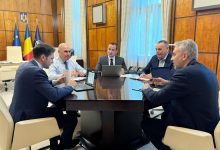
The MEP stressed that the initiative represents a significant strategic opportunity, which will contribute to strengthening the country’s regional role and send a clear message that Romania is not on the periphery of European decision-making, but at its centre.
The project could also provide European expertise, investment, and defence capabilities on national territory.
“I will continue to do everything in my power to make this project a reality. Now it is time for the authorities in Bucharest to come up with a concrete version. For Europe’s security. For Romania,” Victor Negrescu added.
European Commission ready to support the decision
In the response from the President of the European Commission, made public by Victor Negrescu, Ursula von der Leyen thanks the MEP and co-signatories for their letter regarding the establishment of a Maritime Security Hub at the Black Sea, as provided for in the EU Strategic Approach to the Black Sea Region, adopted on May 28, 2025.
“Your support for this new policy is greatly appreciated. We have noted the substantive arguments in favour of hosting the Maritime Security Hub in Romania. This is a decision to be taken by the EU Member States. I can assure you that the European Commission is ready to support a decision by the riparian states, including Romania, in this respect,” Ursula von der Leyen wrote.
She recalls that a series of EU policy initiatives have been developed in response to the geopolitical challenges posed by Russia’s war of aggression against Ukraine.
“All these initiatives bring an increased focus on awareness, preparedness, resilience, security and defence. In this context, the Black Sea Maritime Security Hub will build on the initiatives of EU Member States and partner countries in the Black Sea region to strengthen maritime security and safety, and will seek to contribute to the monitoring and protection of critical maritime infrastructure, as well as developing the maritime means and capabilities of EU Member States for this purpose,” Ursula von der Leyen said.
The particular case of Romania
The creation of the European maritime security hub at the Black Sea in Romania is a complex strategic project involving several political, administrative, technological, and international cooperation stages.
“We are trying to analyse what needs to be done in concrete terms for Romania to be able to launch and host this hub. And there are many aspects to consider, and they are not simple. Romania is a natural location for the European Maritime Security Hub. As a member state of the European Union and NATO, Romania offers a credible coordination framework between the Euro-Atlantic structures and the riparian states. Its operational experience in the Black Sea, combined with existing infrastructure—including the Port of Constanta, naval and maritime forces, and advanced monitoring systems such as SCOMAR, radars, and AIS networks—ensures the ability to conduct complex security and surveillance operations,” according to a document published by umbrela-strategica.ro.
Furthermore, Romania’s geostrategic position places it at the crossroads between the European Union, NATO, and regional partners, facilitating interoperability, rapid information exchange, and real-time coordination of operations. This combination of operational experience, existing infrastructure, and strategic positioning gives Romania the credibility and capacity necessary to host a European maritime security hub, transforming the Black Sea into a stable, secure, and predictable area, protecting the economic, energy, and strategic interests of the European Union and strengthening Romania’s role as a central player in the European security architecture.
Obtaining the agreement and commitment of the EU Member States is an essential step in realizing the hub initiative. This initiative cannot be implemented solely with the support of the European Commission, which has a political and technical support role, but requires a clear consensus from the Member States, in particular those bordering the Black Sea, such as Romania and Bulgaria, and possibly other interested states.
To this end, it is necessary to initiate formal negotiations between the riparian states with a view to jointly defining strategic objectives and interests. These consultations should lead to an agreement on the role, structure, tasks and legal status of the hub, so that it can operate efficiently and in line with existing European policies.
At a later stage, to ensure political legitimacy and long-term sustainability, the initiative could be included in future decisions of the Council of the European Union, which would reinforce Member States’ commitment and facilitate access to EU funding and coordination mechanisms.
The development of a concrete project at national level is a prerequisite for moving forward with the initiative to create the European Black Sea Maritime Security Hub. In this regard, Romanian authorities, through the coordinated involvement of ministries and institutions with responsibilities in the field of security, defence, and European affairs, must present a detailed and coherent plan that goes beyond declarations of intent and, above all, is consistent with Romania’s future Maritime Security Strategy, according to the cited analysis.
This project must clearly define the hub’s mission and areas of competence, as well as its governance structure, coordination mechanisms, the roles of the institutions involved, and the contributions of each actor.
It is also necessary to establish a realistic financing plan, including the estimated budget, national and European funding sources, and forms of support from the European Union.
The project must provide a phased operational schedule, from the preparation phase to the full operationalization of the hub.
At the same time, the proposed location in Romania must be explicitly indicated, with clear arguments, Constanta being a relevant example, given its geostrategic importance and proximity to the main critical maritime points.
The European Commission has explicitly emphasized the need for the authorities in Bucharest to present such a concrete and well-founded project as a prerequisite for supporting and promoting the initiative at European level.