
Renewable Energy in the Middle East: Ambitions, Rivalries, Strategies

The Middle East is historically a dominant oil and gas area. The region is undergoing a rapid transformation towards renewable energy. As the fastest growing renewable energy market outside China, the Middle East is a global centre for innovation and investment in clean energy.
At the World Future Energy Summit held this January in Abu Dhabi, companies from around the world presented cutting-edge technological innovations in the field, discussing concrete solutions for a sustainable and more environmentally friendly energy future. Visitors were able to observe an increasing effort by Middle Eastern countries to accelerate their transition to renewable energy. However, in the Arab world, one cannot ignore a political element that is increasingly weighing on the region’s energy scene: the growing strategic rivalry between Saudi Arabia and the United Arab Emirates.
Over 23 gigawatts of renewable energy capacity by 2031
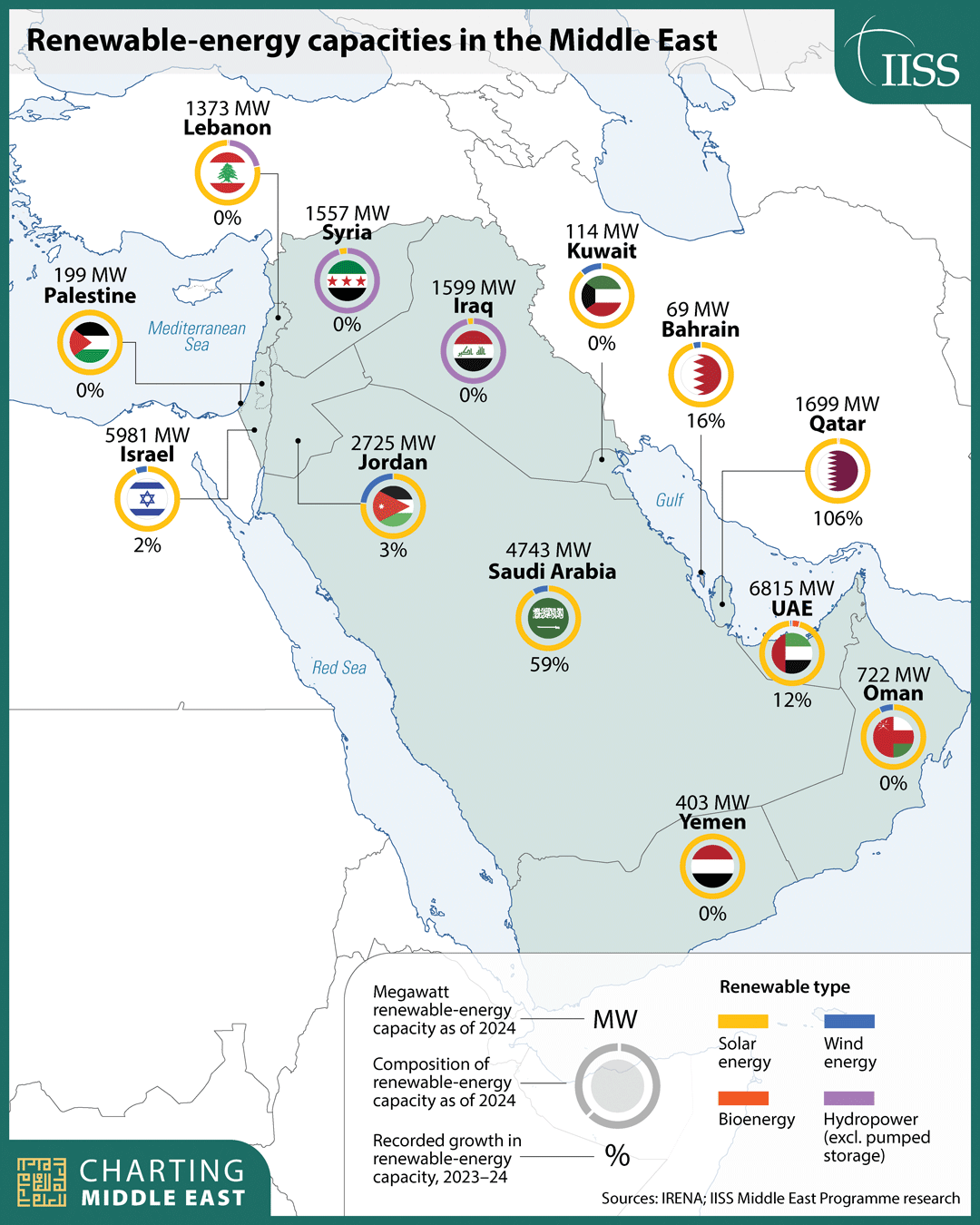
In a statement to the Emirates News Agency (WAM) on the sidelines of Abu Dhabi Sustainability Week 2026, Suhail Mohamed Al Mazrouei, Minister of Energy and Infrastructure, indicated that the United Arab Emirates installed renewable energy capacity currently exceeds 7.7 gigawatts. He added that projects currently under development will increase this capacity to over 23 gigawatts by 2031, demonstrating the rapid pace of transformation of the national energy system.
The official noted that national investments in the renewable and clean energy sector exceeded AED 190 billion, highlighting the high level of confidence placed in this strategic sector as a key driver of sustainable development and low-carbon economic growth.
Suhail Al Mazrouei pointed out that the United Arab Emirates has raised its national target for electricity production from clean sources to 35% by 2031. He also added that the National Hydrogen Strategy for 2050 has been integrated into the country’s overall energy planning framework, strengthening the UAE’s readiness for a low-carbon energy future.
Installed renewable energy capacity increased by 117% between 2022 and 2025, reflecting the effectiveness of national policies and the accelerated implementation of strategic projects aimed at building a more sustainable and efficient energy system.
The minister specified that national energy efficiency programs, led by the National Water and Energy Demand Management Program launched in 2020, have reduced carbon emissions by more than 14.8 million tons and generated financial savings of more than USD 2 billion over five years.
These efforts are part of a national roadmap to reduce energy consumption by 43% and water consumption by 50% by 2050.
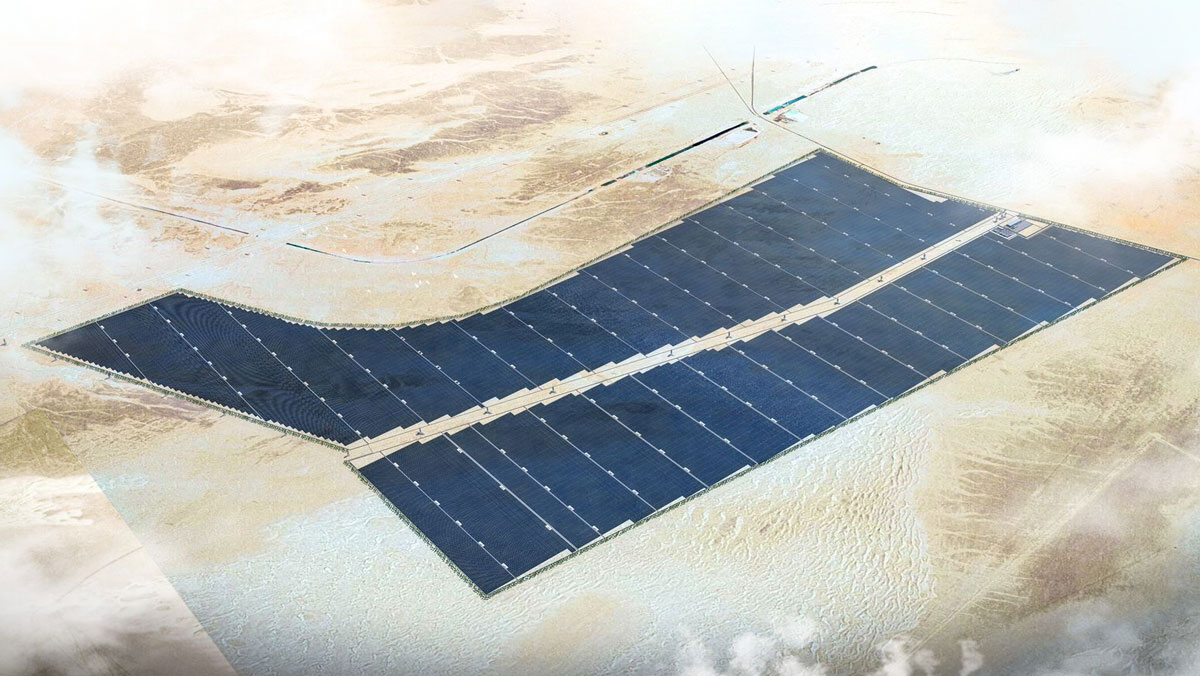
The United Arab Emirates has become a leader in the Middle East’s renewable energy sector, thanks in large part to state-owned Masdar. Masdar has significant expansion plans in solar power, including projects with multi-gigawatt capacities and large-scale battery storage. This focus on large-scale projects underlines the UAE’s commitment to clean energy.

Sultan Al Jaber, president of Masdar, highlighted the transformative potential of such initiatives, noting the goal of converting renewable energy into baseload power—the minimum amount of continuous energy needed to meet electricity demand, traditionally provided by conventional sources.
By integrating renewable sources with battery storage, these projects aim to make clean energy a reliable and consistent source of electricity, underscoring the UAE’s commitment to achieving its net-zero emissions target by 2050.
Saudi Arabia’s Green Vision 2030 – potential leader in battery production
Saudi Arabia is making significant progress toward renewable energy as part of its Vision 2030 economic diversification plan. The Kingdom aims to generate 50% of its electricity from renewable sources by 2030, targeting a total capacity of 130 GW from solar and wind power. This ambitious state target reflects recognition of the importance of sustainable energy in the long term.
Saudi Arabia’s ambition to finance gigawatt-scale scale renewable projects to achieve 50% renewable-energy generation by 2030 exemplifies the wider petrostate strategy of using revenues from fossil-fuel exports to secure domestic energy supply for future growth. The success of its broader technology-driven modernisation strategy, including the ambitious development of energy- and water-intensive data centres, is underpinned by energy expansion. Renewable investments are necessary to prevent potential resource constraints on other critical sectors as a consequence of this modernisation, such as Saudi Arabia’s efforts to create a self-sufficient agri-food industry. Current rates of worsening water scarcity anticipate the kingdom will face a 65% reduction in agricultural production from today’s levels by 2050, the most significant projected losses in the region, followed by Yemen (35%) and Syria (13%). As of 2023, public energy was used for irrigation in 44.7% of Saudi Arabia’s agricultural land, 98% of which was powered by water-intensive diesel. In addition to other technological industrial advancements, a shift towards renewable-powered groundwater pumping, desalination, or wastewater treatment, as well as still-necessary large-scale food imports, will all require extensive funding. Maximising hydrocarbon export revenue by reducing domestic energy usage is a key component of Saudi Arabia’s strategic growth.
This growing focus on renewables in the Middle East is attracting significant attention from international investors.
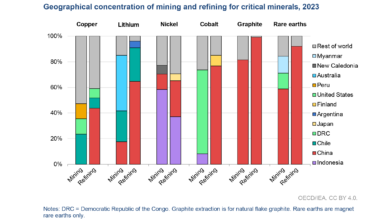
Saudi Aramco’s investment in lithium production underlines its growing commitment to energy storage solutions, a key driver of renewable energy expansion. Lithium is essential for the production of batteries, which play a crucial role in stabilizing electricity supply from intermittent renewable sources such as solar and wind power. By securing a foothold in the lithium market, Saudi Aramco is not only supporting the development of large-scale energy storage systems but also strengthening the region’s ability to move to a more resilient and sustainable electricity grid.
The move positions Saudi Arabia as a potential leader in battery production, reinforcing its sustainability agenda. The scale of investment in renewable energy projects across the Kingdom demonstrates a clear commitment to a cleaner energy future.
Regional investment and international partnerships
Beyond the United Arab Emirates and Saudi Arabia, the whole region is aiming for a surge in green energy development. By 2030, investments in this sector are expected to reach USD 75.63 billion. This growth is driven by several factors, such as high solar and wind potential, the economic benefits of renewable energy, reducing domestic consumption of fossil fuels, and global partnerships that strengthen energy security and innovation. These partnerships are essential for sharing expertise and accelerating the deployment of renewable energy technologies.
The increasing flow of capital to renewable energy companies in the Middle East underlines the region’s attractiveness for investors.
The key to success in the Middle East – ambitious national policies, technological breakthroughs and international collaborations
The Middle East’s commitment to renewable energy paves the way for a sustainable and prosperous future.
With a combination of ambitious national policies, technological advances and international collaborations, the region is fast becoming a global leader in clean energy innovation. The continued expansion of renewable energy projects will not only help reduce the carbon footprint, but will also create thousands of jobs, attract foreign investment and stimulate economic growth.
By harnessing its abundant solar and wind energy resources, the Middle East has the potential to redefine its energy landscape and lead the race towards a greener and more sustainable future. The region’s drive towards a cleaner energy mix is transforming its economic prospects and its role in the global energy landscape. This transition is not without challenges, but the commitment and investment shown by countries in the region suggest a positive trajectory for renewable energy in the Middle East.
Saudi-Emirati rivalry, at the heart of the energy game
There is a growing strategic rivalry between Saudi Arabia and the United Arab Emirates on the regional energy scene.
For several years, Riyadh has pursued an aggressive policy to establish itself as the new economic and industrial centre of the Gulf. In the energy sector, this strategy translates into massive investments in solar, wind and especially green hydrogen, integrated into a long-term industrial vision driven by Vision 2030. Saudi mega projects are designed as levers for industrial relocation, attracting regional headquarters and controlling value chains.
Saudi Arabia’s decision to require firms wishing to contract with the state to move their regional headquarters to Riyadh from 2024 has accelerated this trend. Several international energy groups have gradually reoriented their operations towards Saudi Arabia, closer to major infrastructure projects.
Long a pioneer in climate diplomacy and soft energy power, the United Arab Emirates is being forced to rethink its positioning. Abu Dhabi, through Masdar, still boasts ambitious targets – notably a portfolio of several tens of gigawatts of renewable energy and a target of 100 GW by 2030, but regional competition is now direct.
Clean energy, a power tool
This rivalry extends beyond the energy sector. This development is part of a broader context of relative cooling in relations between Riyadh and Abu Dhabi, marked by disagreements on regional issues, discord within OPEC+, and distinct strategies for attracting foreign capital.
In this new landscape, clean energy becomes an instrument of power on a par with finance, defence or diplomacy.
Large international forums such as ADSW retain their symbolic value and networking role. However, their real influence now depends less on media visibility than on their ability to become part of concrete industrial dynamics.
Energy transition is no longer a matter of consensus; it has become an arena of strategic competition.
Consequences for neighbouring countries engaged in their own energy transitions
Redistribution of investment flows and industrial priorities could permanently reshape regional balances. More specifically, how can neighbouring countries committed to developing renewable energy, but with financial resources incomparable to those of the Gulf states, take advantage of this rapidly evolving new regional energy order?
Time will give us the answer.