
Politehnica Bucharest, Part of the €2.5bn NanoIC Project
Romania Joins the European Semiconductor Elite

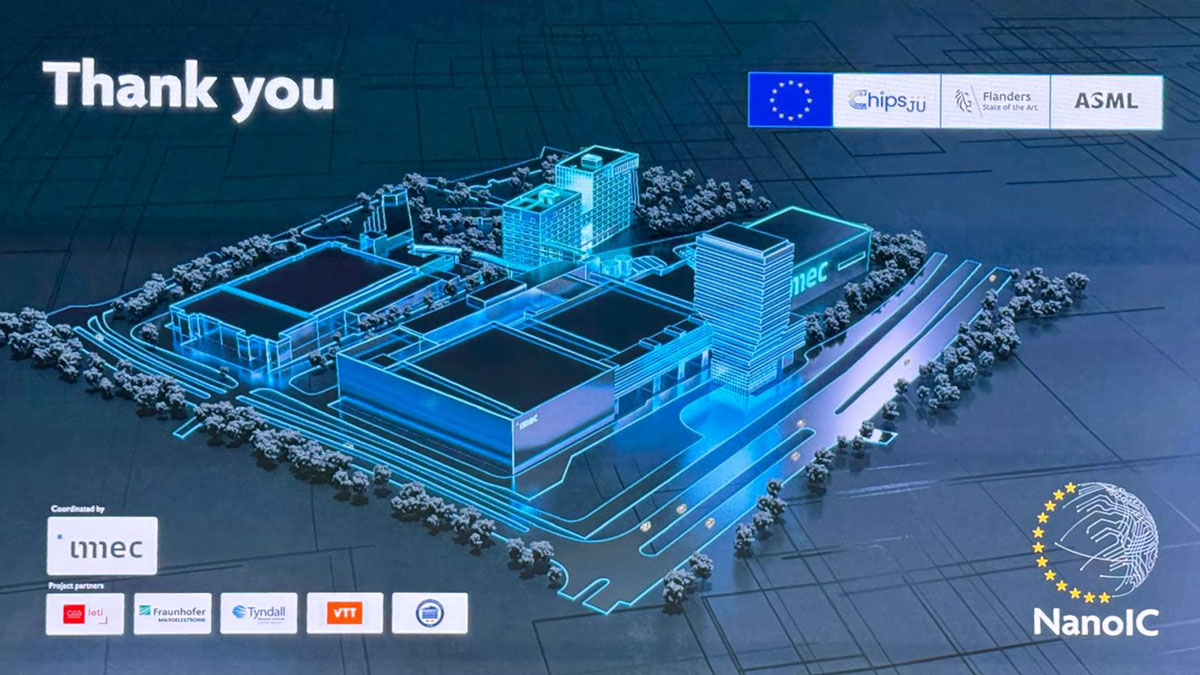
Through the National University of Science and Technology Politehnica Bucharest, Romania is becoming part of the most ambitious European initiative in the field of microelectronics, the NanoIC project, officially launched four years after the announcement of the EU Chips Act—the strategy through which the European Union aims to reduce its dependence on Asia and the US in the semiconductor industry.
The announcement was made by Mihnea Costoiu, Rector of Politehnica University of Bucharest, who emphasized the importance of this moment for Romanian research and for Romania’s strategic positioning in Europe’s new technological architecture.
On February 9, 2022, European Commission President Ursula von der Leyen launched the EU Chips Act in Brussels, a program designed to bring Europe to the forefront of the global semiconductor industry. Exactly four years later, the launch of NanoIC marks a concrete step in this direction. The project, valued at €2.5 billion, aims to conquer the “Angstrom scale” – below the 2-nanometer threshold – where traditional physics is reaching its limits and new generations of integrated circuits are opening unprecedented prospects for artificial intelligence, 6G communications and quantum computing.
“Politehnica Bucharest is not just a partner in this project. We are Eastern Europe’s only representative in an elite consortium, alongside giants such as IMEC, CEA-Leti and Fraunhofer,” Mihnea Costoiu said. According to the Rector, Romanian researchers are working on an equal footing with world leaders in microelectronics, contributing to the development of technologies that will define the next decades.
Politehnica’s participation in this consortium has a strong strategic significance. In a global context marked by intense technological competition and geopolitical tensions, semiconductors have become a critical resource, essential for the defence, automotive, telecommunications and energy industries. Europe aims to double its global market share by 2030, and NanoIC is one of the central pillars of this goal.
The UPB Rector emphasized that this success is the result of a sustained academic vision and a coordinated effort at governmental and diplomatic level. “It is a result that bears the stamp of the vision and tenacity of Professor Marius Enachescu, who has shown that Romania can overcome financial and geographical barriers,” Mihnea Costoiu added.
He also thanked former Economy Minister Florin Spataru, Prime Minister Marcel Ciolacu and Ambassador Andreea Pastarnac for their support during the crucial negotiations for Romania’s inclusion in this European project.
Beyond the symbolic component, the participation of Politehnica Bucharest in NanoIC may have medium and long term economic and industrial effects. Integration into European innovation chains in microelectronics can attract investment, strengthen the local R&D ecosystem and generate opportunities for Romanian high-tech industry.
In a Europe that is trying to regain its strategic autonomy in critical areas, Romania, through Politehnica Bucharest, is taking an important step from the position of a beneficiary of technologies to that of a contributor to their development. “Investing in centres of excellence such as the Politehnica University of Bucharest is the only realistic way for Romania to stop being a spectator and become a powerful player in the new industrial revolution,” Mihnea Costoiu concluded.