
Transelectrica-Georgian State Electrosystem MoU for Black Sea Submarine Cable

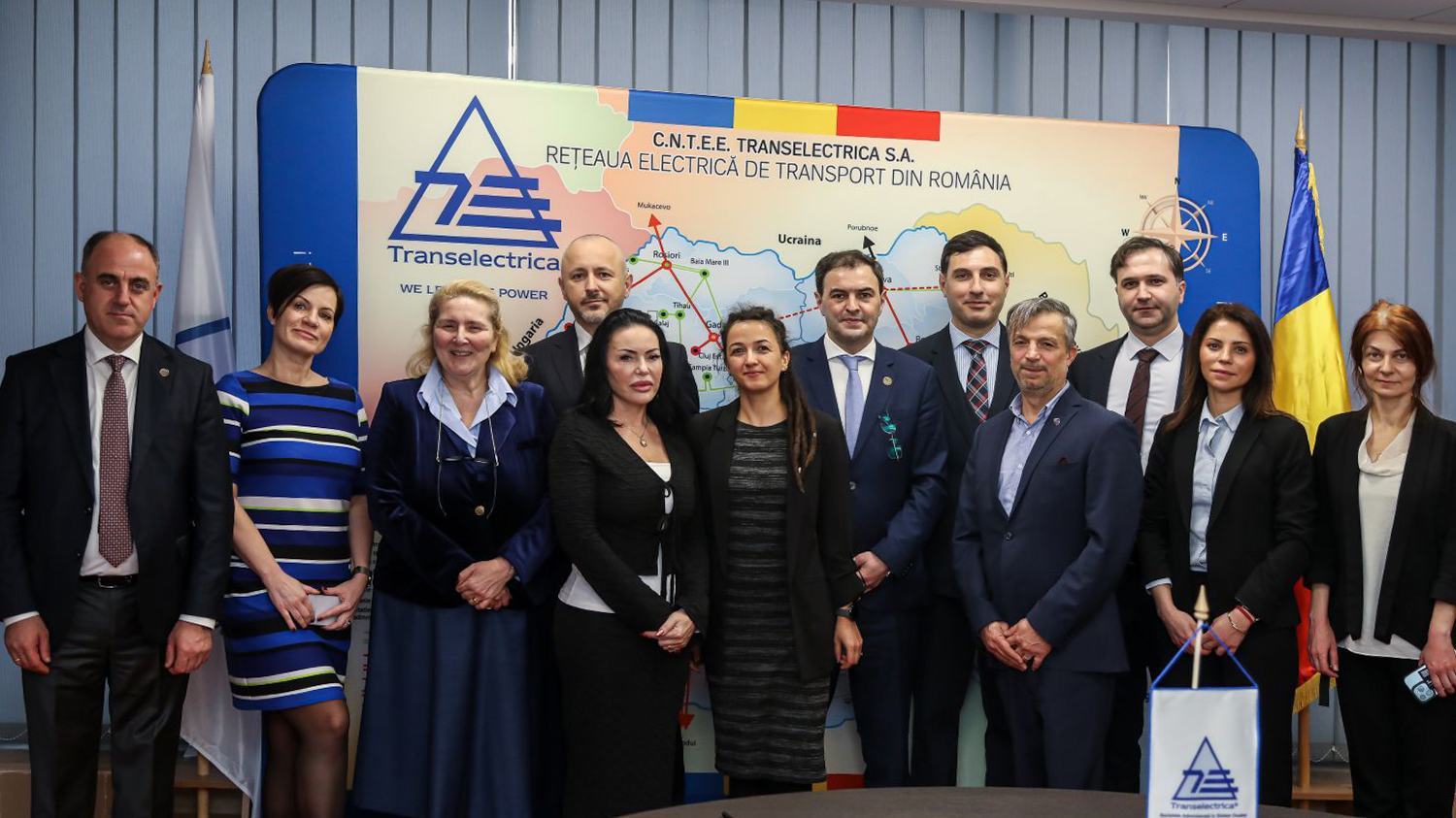
The National Power Grid Company Transelectrica and Georgian State Electrosystem (GSE), transmission and system operators in Romania and Georgia, respectively, on February 4 signed in Bucharest a Memorandum of Understanding (MoU) on cooperation for the development of the Georgia-Romania Submarine Cable Interconnection Project in the Black Sea, which has reached an advanced stage of development.
The signing of the Memorandum marks a new stage in the evolution of the project, which has already gone through the feasibility study phase, is included in ENTSO-E’s Ten-Year Network Development Plans (TYNDP) for 2022 and 2024, and is being promoted for inclusion in the 2026 TYNDP edition. In December 2025, the project was included in the list of Projects of Mutual Interest (PMI) of the European Union.
The document signed in Bucharest establishes the framework for cooperation between Transelectrica and GSE for the preparation and advancement of the high-voltage direct current interconnection project (HVDC) between Georgia and Romania, by coordinating planning activities, technical studies, marine studies, environmental and social assessments, financing, and institutional representation at European and international level.
“The signing of this Memorandum reflects the maturity and significant progress made by the Black Sea Submarine Cable Project, as well as Transelectrica’s firm commitment to actively contribute to the development of strategic energy infrastructure for the region. Close collaboration with Georgian State Electrosystem strengthens Romania’s role as a regional energy hub and supports European objectives on energy security, market integration, and the transition to green energy,” said Stefanita Munteanu, CEO of the National Power Grid Company Transelectrica.
The Black Sea Submarine Cable Project is being developed in accordance with the Strategic Partnership Agreement on Green Energy, signed in December 2022 by the governments of Azerbaijan, Georgia, Romania, and Hungary, and has the potential to contribute significantly to increasing energy security, diversifying electricity transmission routes, and integrating renewable sources in the Black Sea region and the European Union.
Through this initiative, Transelectrica reaffirms its commitment to regional cooperation, the development of critical electricity transmission infrastructure, and the strengthening of Romania’s position in the European energy architecture.